
- 09/22/2026
- 146 Views
- Comment
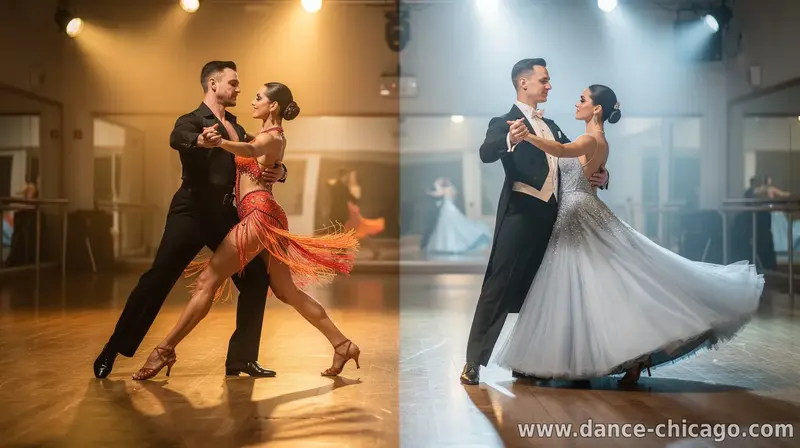
Latin and Standard are two major categories within competitive ballroom dance—and two distinct paths for anyone learning partner dancing. While both emphasize connection, timing, and technique, they reward different styles of movement and musical interpretation.
Start with the music you want to move to
Standard ballroom is typically danced to smoother, often 4/4-oriented sounds such as waltz, tango, and foxtrot (with styling that prioritizes flow and line). Latin ballroom leans into faster, more percussive rhythms—think cha-cha, rumba, samba, and jive—where body action and rhythmic accents are central.
Compare the feel: sway vs. bounce
Standard commonly features a more gliding frame, upright posture, and traveling “rise and fall” that creates a continuous sense of movement. Latin focuses more on grounded action, hip movement, and expressive shaping, with sharper weight changes and a more clearly articulated beat.
Check what judges (and audiences) reward
In competition settings, Standard routines are often evaluated for look of the line, control, and consistent technique across patterns. Latin routines tend to be judged heavily on rhythm accuracy, hip action quality, expression, and the clarity of character in each dance.
Think about your learning preferences
If you enjoy precision posture, smooth travel, and building long visual lines, Standard may feel rewarding early. If you prefer musicality, dramatic contrast, and more physically “active” rhythm, Latin might match your instincts sooner. Many dancers also find that taking a short trial in both disciplines helps confirm what energizes them outside practice.
For beginners, it can help to focus on fundamentals in whichever track you choose: partner connection, timing, balance, and clear footwork. Even when the styles look different, strong basics make every dance easier—whether you’re working on a waltz-like glide or a cha-cha rhythm.
If you’re unsure, consider practical signals: Do you want lessons that emphasize frame, alignment, and sustained motion (Standard)? Or do you want sessions that emphasize rhythm drills, body action, and expressive character (Latin)? Matching your training to your preferences often leads to faster progress and more motivation.
Ultimately, the “right” track is the one that keeps you practicing. Try both if you can, ask your instructor to recommend a level-appropriate starting syllabus, and choose the style that best fits the music you already enjoy dancing to.
Related materials
Be the first to share your opinion with others.