
- 10/20/2026
- 231 View
- Comment
Ballroom dance can look effortless from the outside, but it’s built on fundamentals: footwork, timing, frame, posture, leading/following, and partner awareness. The good news is that progress usually comes fast at the start—especially with regular classes and practice.
Below is a realistic learning timeline for beginners, plus what changes the schedule depending on your goals.
First steps: 1–4 weeks (learning the basics)
In your first few weeks, you’ll typically focus on fundamentals rather than “looking like a pro.” Most beginners can expect to learn core patterns, basic turns, and how to maintain a stable frame and connection with a partner.
With 1 class per week and a small amount of practice (even 20–30 minutes at home or in a studio between classes), you can usually become comfortable with:
- Walking and positioning in hold
- Simple timing (counting and staying in sync)
- Basic step patterns and a few turn entries/exits
Building consistency: 1–3 months (dancing with control)
By one to three months, your goal shifts from “getting through the steps” to dancing them smoothly and consistently. You’ll start noticing improvements in balance, direction changes, and how well you maintain rhythm under real social conditions.
If you take two classes per week (or one class plus frequent practice with your partner), many learners can begin social-dance confidently within this window—meaning you can follow music, recover from common mistakes, and keep moving without constantly stopping.
At this stage, you’ll likely work on more combinations, turn variations, and partner skills (such as clearer leads or more reliable following cues).
From “okay” to “impressive”: 3–6 months (cleaner technique)
Between three and six months, the improvements often feel less dramatic week to week, but they’re deeper: better posture endurance, cleaner foot placement, smoother rotation, and more natural-looking styling. You’ll also become more aware of spacing—how to travel around the floor without bumping and how to adjust when other couples pass.
With consistent practice, learners often reach a stage where they can handle multiple songs in the same style and maintain quality even when the tempo changes.
Advanced comfort: 6–12+ months (style, speed, and variety)
Ballroom is broad. Learning multiple styles (like waltz, foxtrot, tango, quickstep, cha-cha, rumba, or swing) takes longer than focusing on one. Many dancers take six to twelve months to feel truly “ready for anything” in one primary style, and longer if they’re adding new rhythms and technique.
If you aim for competition or performance, expect a longer timeline. Refining technique, choreography, and partner polish is a continuous process—often measured in years rather than months.
What most affects your timeline
Two people can start at the same time and progress differently. These factors usually explain why:
- Practice frequency: Regular attendance plus short, consistent practice beats occasional long sessions.
- Goal: Social dancing can happen in months; competition-level refinement takes longer.
- Partner consistency: Practicing with the same partner (or getting reliable coaching) accelerates learning.
- Style choice: Some rhythms are easier to pick up quickly; others demand stronger musical interpretation and technique.
A realistic “starter plan”
If you want the most efficient progress, aim for a structure that builds both instruction and repetition:
- Attend 1–2 classes per week (choose the level that matches you).
- Practice 20–60 minutes on most days (or at least several times per week).
- Work on one or two key figures at a time until they feel automatic.
- When possible, practice with music you’ll actually dance to (not just counting).
This approach helps you internalize timing and frame, which are the foundations of ballroom movement.
Bottom line
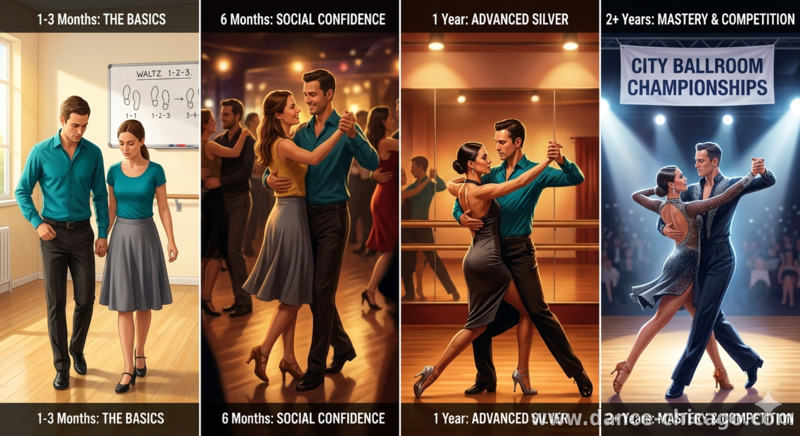
For most beginners, a realistic timeline looks like this: basic competence in 1–4 weeks, noticeable confidence in 1–3 months, smoother technique in 3–6 months, and advanced comfort in 6–12+ months depending on how many styles you learn and how often you practice.
If you tell me which ballroom style you want to learn first (waltz, foxtrot, tango, cha-cha, etc.) and how many classes per week you’re planning, I can help you estimate a more precise timeline.
Related materials
Be the first to share your opinion with others.