
- 09/21/2026
- 187 Views
- Comment
Ballroom dance shoes aren’t just about looks—they directly affect your traction, stability, and the way your foot moves through turns. The “right” pair depends on your dance category (standard vs. latin), your experience level, and where you’ll be dancing most often.
1) Match the shoe to the dance style
Start by separating your needs by discipline. Standard and rhythm/latin shoes differ in outsole design, heel shape, and overall feel. In most cases, standard shoes are built to support long lines and smooth pivots, while latin shoes often emphasize grip and quick action for sharper footwork.
2) Prioritize fit: comfort and control come first
A proper fit reduces blisters and helps you control your foot placement during steps and turns. Look for a snug feel without pinching—especially across the toe box and along the sides. If you’re between sizes, it’s usually better to size carefully rather than “break into” a shoe that’s too tight.
When trying on shoes, pay attention to these quick checks: your heel shouldn’t lift excessively, your toes shouldn’t curl uncomfortably, and you should be able to stand and take a few controlled steps without numbness or hotspots.
3) Understand sole and traction for your floor
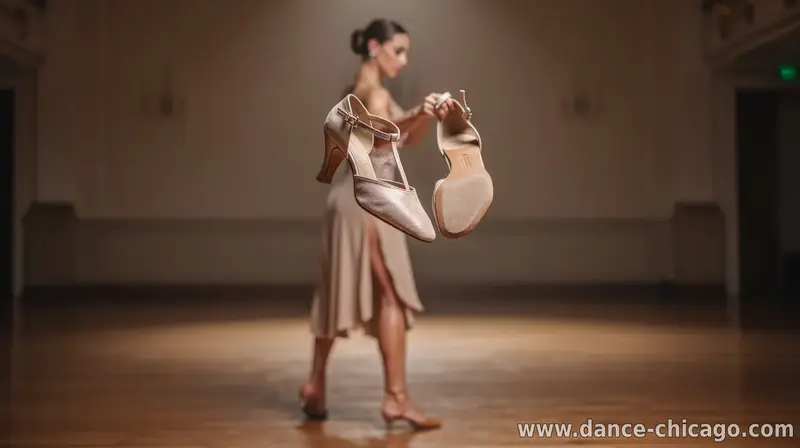
Sole materials and traction influence how much slide you get during movement. Softer or suede-like elements can offer controlled grip suited to many studio floors, while slick surfaces may demand a different level of traction. If you practice on wood, sprung floors, or similar surfaces, choose shoes that match that glide-to-grip balance rather than relying on aesthetics alone.
For smoother turns, pay attention to how the shoe feels when you rotate your foot—there should be enough contact to stay stable, but not so much that you get stuck mid-turn.
4) Choose the right heel height and support
Heel height should support clean technique, not force it. Higher heels can look elegant, but they can also change your posture and make it harder to maintain balance if you’re not ready. Consider starting with a height that feels stable while you practice basic steps and smooth walking transitions.
For support, look for secure construction around the ankle/instep (depending on the shoe style). A well-supported shoe helps reduce wobble, which is especially important in traveling steps and quick direction changes.
5) Ensure durability and materials fit your training routine
Ballroom shoes can last a long time if you choose quality materials and maintain them properly. If you’re practicing frequently, consider leather or well-made synthetic uppers that breathe and hold their shape. For bottoms, check that the sole and any specialized surface treatments don’t wear down faster than you can replace or maintain.
Also think about how often you’ll attend events. A versatile pair for practice and competition can be useful, but some dancers prefer dedicated practice shoes and event shoes for consistency.
Quick checklist before you buy
- Style match: choose standard vs. latin construction for your dance.
- Fit check: heel secure, toes comfortable, no pinching.
- Traction balance: glide vs. grip suited to your usual floor.
- Heel comfort: stable height that supports clean posture.
- Training reality: durable materials for how often you practice.
If you can, try shoes on with the kind of socks/fit you’ll use for practice, and take a few minutes to walk, pivot, and shift weight. If your studio has a pro shop or coach, ask for recommendations based on your typical floor and current level.
The best ballroom shoe is the one that lets you move with confidence—so technique feels easier and you can focus on the music, timing, and precision.
Related materials
Be the first to share your opinion with others.