
- 09/22/2026
- 156 Views
- Comment
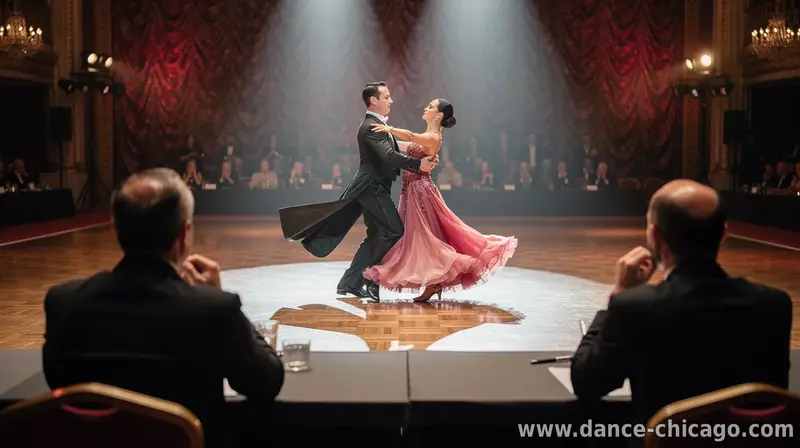
Ballroom competitions can look subjective, but judging is built on repeatable criteria. While each event and federation may emphasize different details, most panels evaluate the same core elements—how well you execute, how clearly you interpret the music, and how effectively you present as a pair.
Technique and fundamental correctness
Judges first look for strong fundamentals. That includes correct posture and frame, accurate foot placement, clean weight changes, and controlled shaping through the body. In partner dances, “clean technique” is also about how consistently you connect—no wobbling at the wrong moment, no late recoveries, and no movement that breaks the look of the line.
For many styles, details like body alignment, rise-and-fall, swing/rotation quality, and the steadiness of movement through turns are indicators of whether you’re dancing with discipline rather than improvisation.
Footwork, timing, and musicality
Timing is where many competitors lose points—even if the choreography is beautiful. Judges listen for how precisely you match rhythm accents, settle on beats, and move through musical phrases. Good musicality isn’t only “feeling the music”; it’s translating rhythm into visible, repeatable timing choices.
Footwork clarity matters too: steps should be sharp enough to read from the audience, but not frantic. Judges also watch for whether movements flow naturally between counts instead of looking like disconnected poses.
Partner connection and synchronization
Because ballroom is a partnership, synchronization is critical. Judges observe how leaders and followers respond to each other—how smoothly timing is shared, how consistently the pair travels together, and how effectively you communicate direction, energy, and intention.
Even when both dancers are skilled individually, mismatched spacing, uneven tension, or late responses to turns can make the performance look less unified. A frequent takeaway from panels: the “strongest” team is the one that looks like one system, not two people moving side by side.
Presentation and styling help judges gauge how well you interpret the character and style of the dance. That includes facial expression, arm styling, line quality, and whether your movement choices match the expected look of the category. Judges want to see control and confidence—movement should feel purposeful, not merely performed.
When teams nail presentation, it doesn’t look exaggerated. It reads as grounded and consistent, with styling that enhances lines and emphasizes key moments rather than distracting from technique.
In addition to performance quality, judges typically consider the overall impression: balance between difficulty and execution, consistency across the routine, and how effectively you manage transitions. A clean routine with solid fundamentals often competes well against a more complex program that shows visible breakdowns under pressure.
If you want to win (or place higher), focus on what judges can reliably score. Prioritize correct technique, demonstrate clear musical timing, and choreograph transitions that protect synchronization. Most importantly, train the routine to be repeatable—because under competition lights and in front of a live panel, consistency is usually what separates finalists from the rest.
Related materials
Be the first to share your opinion with others.