
- 09/22/2026
- 163 Views
- Comment
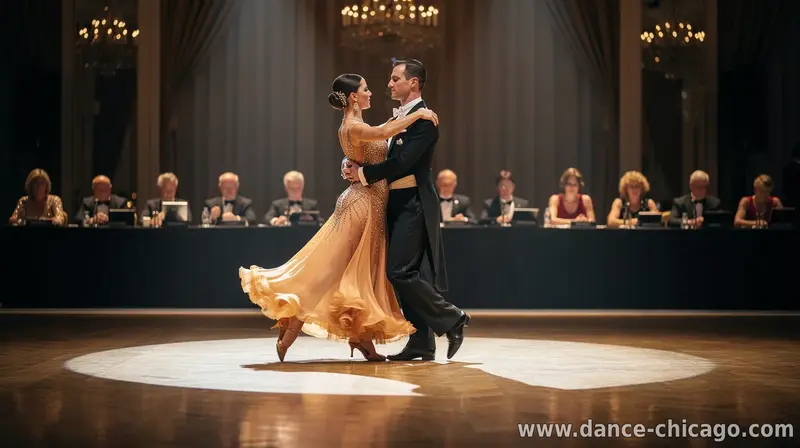
In ballroom competitions, judges typically use a structured scoring framework that rewards clarity, control, and consistency—not just showmanship. While exact categories vary by event and governing body, the priorities behind the marks are remarkably consistent across styles.
1) Technique and execution
Judges look for clean fundamentals: correct frame, shoulder alignment, posture, and body placement. Footwork accuracy matters just as much as arm line and partner connection—errors that break shape or create instability tend to be visible immediately and can lower scores across multiple sections.
2) Timing, rhythm, and musicality
Ballroom isn’t only about moving to music; it’s about matching the dance to rhythm and phrasing. Judges watch whether steps land with the music’s structure, whether weight changes are timely, and how clearly the couple reflects tempo changes and accents. A technically correct routine with poor timing often scores below a slightly less flashy one with stronger musical alignment.
3) Movement quality: frame, control, and travel
Judges evaluate how the couple moves through space—smoothness, balance, and the ability to maintain a stable frame through turns, lines, and traveling actions. Consistency is key: if posture or connection collapses during rotations or transitions, it signals a lack of control that judges can penalize.
They also consider “shape through the whole body,” meaning that lines should look intentional from head to toe. This includes how partners generate rise and fall (where applicable), manage sway and rotation, and keep movements cohesive rather than segmented.
4) Partnering and interpretation of the partnership
Ballroom is a duel in synchrony. Judges look for clear lead-follow or styling partnership, including consistent connection, coordinated actions, and mutual alignment in lines. When one dancer appears delayed, overpowered, or visually disconnected from the other, it can interrupt the perceived quality of the partnership.
Judges also tend to reward couples who interpret the character of the dance in a controlled way—showing confidence and intent without letting performance choices compromise technique.
How dancers can train to meet judging priorities
Most competitors improve their marks fastest by aligning practice with what judges can see: drill footwork for timing accuracy, rehearse transitions to protect frame and balance, and train partner connection with consistent signals. Recording practice—then comparing it against the dance’s rhythm and line standards—helps identify where execution breaks during pressure.
Ultimately, competition results reflect a combination of technical correctness, rhythm, cohesive movement, and partnership quality. Dancers who treat those elements as trainable skills—rather than relying on instinct—tend to perform with the consistency judges reward most.
Related materials
Be the first to share your opinion with others.