
- 10/21/2026
- 197 Views
- Comment
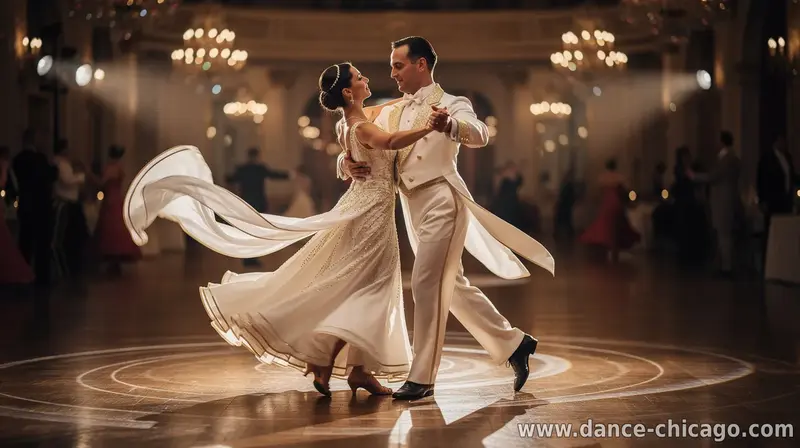
The Viennese waltz is often described as a faster, glossier sibling of the ballroom waltz—yet what truly sets it apart is how it travels through the floor. Rather than simply spinning, dancers create a continuous flow powered by precise rotation and a recognizable rise and fall.
Continuous rotation: the engine of the turn
In the Viennese waltz, rotation is the foundational action that gives the dance its characteristic “rolling” look. The couple rotates around a shared axis while maintaining smooth contact and consistent frame. That means the movement is not a series of separate turns, but one sustained rotational pattern that carries the body from figure to figure.
At a technique level, rotation depends on coordinated alignment: the leader’s body and the follower’s response create a stable partnership axis, while footwork supports the timing. When rotation is clear, the couple appears to glide even at higher speed.
Rise and fall: why the waltz looks buoyant
Rise and fall refers to vertical shaping that happens as weight transfers through the steps. In the Viennese waltz, that rise is typically subtle and controlled, growing during movement preparation and then settling during the execution of each step phase. The result is a rhythmic “lift and soften” that enhances flow and highlights the couple’s center.
Importantly, rise and fall are not about jumping. Instead, they are about lowering the weight at the right moments and using the legs and ankles to absorb and release energy. Done well, the movement looks effortless—like the couple is floating just above the floor rather than pushing through it.
How rotation and rise/fall work together
Rotation and rise and fall reinforce each other: rotation provides the directional continuity, while rise and fall organize the timing and musical phrasing. When the couple rises during the approach into a rotational phase and lowers during the settling moments, the dance naturally “breathes” with the music’s phrasing and tempo.
A common challenge is letting the torso drive the rise too aggressively or mistiming the vertical changes. If the rise happens at the wrong time—or if the fall becomes heavy—the rotation can feel choppy, and the couple may lose the smooth, elongated line that defines the Viennese waltz.
Practical cues for improving the look
Coaches and dancers often use simple mental cues to keep the mechanics clean. The goal is to make the dance look fast and effortless without sacrificing stability.
- Keep your axis steady: rotation should feel wrapped around a consistent center, not wobbling side to side.
- Think “lift before it’s needed”: rise is prepared during the prior beat range, then expressed during the step.
- Let the feet support the fall: lowering should come from controlled weight transfer, not from dropping the upper body.
- Match rise/fall to phrasing: align the vertical action with musical accents so it reads clearly to an audience.
With the right technique, the Viennese waltz becomes a smooth continuum: rotation keeps the couple turning and traveling with purpose, while rise and fall creates that signature buoyant “spark.” Whether you’re practicing in a studio or preparing for a performance, focusing on these two principles can help you make your waltz look both faster and more musical.
Related materials
Be the first to share your opinion with others.