
- 09/20/2026
- 80 Views
- Comment
In ballroom dancing, the difference between “looking right” and actually moving well often comes down to one thing: your frame and posture. Before you refine timing or learn new figures, your body has to provide a clear structure—so your movements travel smoothly, your partner feels secure, and your lines read confidently from every angle.
A strong ballroom frame is less about rigid stiffness and more about organized alignment. Think of it as a supportive shape you can maintain through motion, giving your arms, shoulders, and torso a consistent “platform.” When that platform is stable, your feet can work efficiently underneath you, and your partner can anticipate how you’ll move.
Posture: Tall, aligned, and ready to move
Great posture begins with how you stack your body. Aim for an upright spine with relaxed but engaged core support, so you’re not leaning forward or collapsing through the shoulders. A helpful cue is to imagine your head moving upward while your weight stays grounded through your standing leg, ready to transfer cleanly.
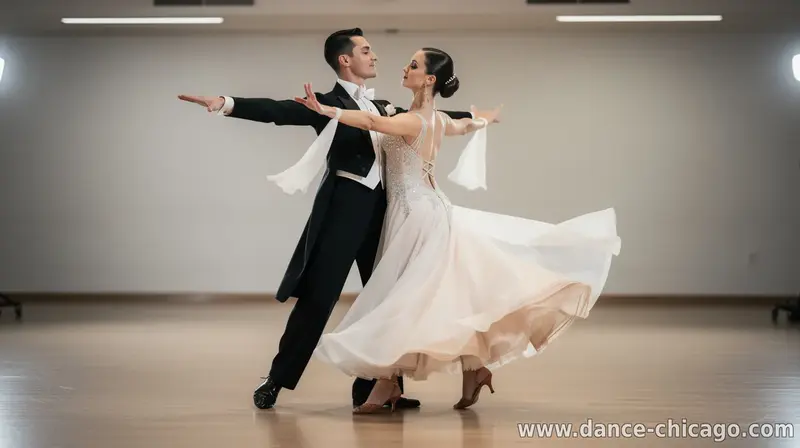
From the side, posture affects line quality immediately—especially in dances where arms and torso shape communicate character. When dancers over-arch or slump, the frame can’t carry motion effectively, and turns and traveling steps tend to feel delayed or unstable.
Frame: Shape, connection, and control
Your frame is created through how you hold your arms, maintain shoulder position, and keep connection with your partner. In practice, you want shoulders that feel “set” (not shrugged up), arms that support the connection, and hands that follow the line of the body rather than floating independently. The goal is clarity: your partner should be able to feel direction and intention through the contact points.
Many dancers benefit from focusing on consistency first. If your frame changes every time you turn or shift weight, your partner has to relearn your body position mid-dance. A steady frame makes communication smoother, which improves timing and reduces tension.
Balance and movement: Why frame affects your steps
Ballroom footwork looks elegant when balance is organized. A stable posture helps you manage rise and fall smoothly, maintain clean pivots, and keep your rotation controlled. Similarly, a reliable frame helps prevent the common “arm collapse” that causes missed spacing, wobbling, or uneven travel lines.
When the frame supports the torso, you can move from a connected center. That connection helps with directional changes and makes it easier to sustain smooth motion rather than relying on quick muscle effort.
Quick self-checks for practice
- Shoulders: Are they relaxed and level, without shrugging?
- Spine: Does your posture feel tall and aligned, not leaning?
- Core: Can you maintain stability during weight transfers?
- Connection: Does your partner feel supported rather than pulled or pushed?
- Arms: Do they follow the body’s shape during turns?
These checks won’t replace technique lessons, but they help you diagnose what’s happening when something feels “off.” If your steps are correct yet your movement looks messy, the issue is often in posture and frame consistency rather than in footwork alone.
Ultimately, ballroom dancing rewards structure. By prioritizing posture that’s upright and grounded, and a frame that’s organized and responsive, you create a foundation that carries every figure—whether you’re practicing smooth waltz rotations, quick rhythm patterns, or the controlled elegance of Latin lines.
Related materials
Be the first to share your opinion with others.