
- 10/23/2026
- 220 Views
- Comment
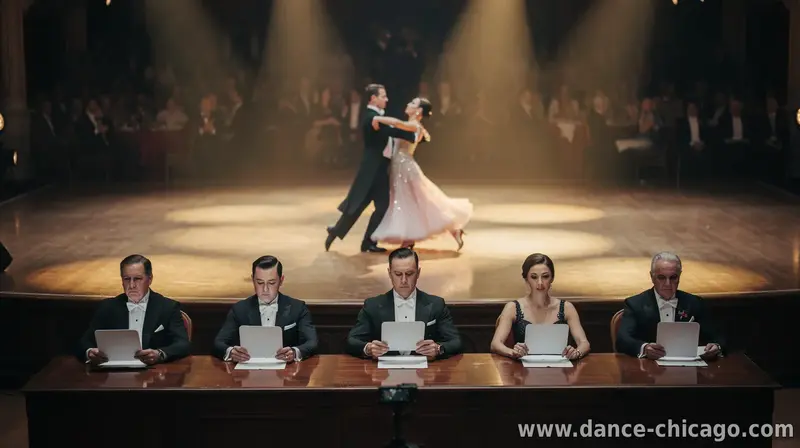
Ballroom dance competitions can look subjective to spectators, but judges typically follow a structured scoring approach tied to official standards. While exact procedures vary by organization and event level, most judging systems evaluate the same core elements: technique, timing, frame, and overall performance quality.
Judges score competitors within the context of the specific dance and category being performed—such as standard vs. Latin, and novice vs. championship. That matters because the expectations for movement, posture, and character differ significantly between styles and difficulty levels.
Technique and execution
A major portion of the score comes from how accurately dancers execute the required figures, steps, and transitions. Judges look for clean footwork, correct body actions, and consistent movement quality. Mistakes like unstable timing, incorrect weight placement, or imprecise patterning can reduce marks even when the overall performance looks energetic.
In many events, technique is also tied to adherence to the syllabus—meaning competitors are assessed on whether their routine reflects the expected fundamentals for their level.
Timing, rhythm, and musicality
Ballroom judges pay close attention to whether the dancers move in sync with the music. Rhythm control includes matching phrasing and accents, maintaining correct tempo throughout the routine, and avoiding “drift” where steps gradually fall out of musical alignment.
Judges also evaluate whether the dancers show musicality through expression—how they shape dynamics (smooth vs. sharp accents), and how effectively movement communicates the character of the music.
Frame, posture, and body lines
In standard dances, judges commonly focus on frame and posture: the stability of the upper body, the quality of contact/hold (when applicable), and the clarity of lines from head to feet. In Latin dances, judges often emphasize body action, hip movement quality, and control that supports styling without looking forced or inconsistent.
Across both categories, “lines” matter—judges reward positions that look intentional and balanced, and they penalize collapsed posture, uneven arm shapes, or tension that disrupts overall aesthetics.
Partnering and connection
Ballroom is a partnership sport, so judges assess how effectively the two dancers move together. That can include leading-following clarity, synchronization of key moments, and the ability to maintain spatial relationship throughout turns and traveling figures.
Judges also notice how confidently the pair handles changes in direction and speed. When one dancer appears delayed, loses alignment, or fails to match the other’s trajectory, it can affect the overall score.
Presentation, styling, and performance quality
Judges evaluate the “whole picture,” which includes expression, confidence, and how convincingly the dancers sell the performance to the audience and judges. Even strong technical execution may score lower if presentation feels detached or inconsistent with the dance character.
Conversely, a well-performed routine with clear technique, musical interpretation, and convincing partnership can score highly because it demonstrates both correctness and artistry.
From marks to placement
Depending on the event, judges may assign placements directly, or they may award numeric marks that are converted into rankings. Some competitions use multiple rounds (such as qualifying and finals), with judges scoring each round separately based on that performance’s quality.
Because scoring is comparative, two dancers with similar technique can receive different results depending on relative execution and the competitive field in that specific heat.
Ultimately, the best way to understand scoring is to study what your organization emphasizes for your specific dance and level—then practice the exact elements judges tend to reward: accuracy of figures, musical timing, clean lines/body action, strong partnership connection, and consistent performance from start to finish.
Related materials
Be the first to share your opinion with others.