
- 09/21/2026
- 265 Views
- Comment
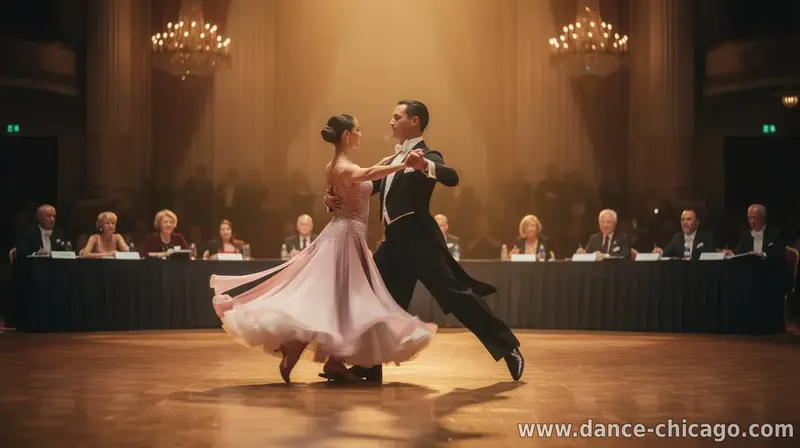
Ballroom competitions rely on a structured judging process designed to evaluate both what dancers do physically and how convincingly they perform the dance. While rules can vary by organization and event level, most scoring systems reward strong fundamentals, consistent technique, and clear communication of style.
At a high level, judges look at whether the performance matches the standards of the specific dance (such as Waltz, Tango, Foxtrot, Cha-cha, or Rumba). They then compare competing couples across the floor, using criteria that often fall into several repeating categories.
1) Technique and frame
A core part of ballroom scoring is the quality of technique and the stability of the partnership. Judges commonly assess posture, arm position, “frame” consistency, and how cleanly the couple maintains its shape through transitions and throughout the routine.
Even when choreography is sophisticated, lapses—such as collapsing frame, uneven arm lines, or inconsistent body alignment—can reduce scores because they affect how clearly the dance standard is expressed.
2) Footwork, timing, and rhythm
Judges also evaluate how precisely dancers execute timing and footwork. This includes whether steps land with appropriate musicality, whether weight shifts are controlled, and whether movement follows the rhythm and accents of the music for that particular style.
In dances with pronounced character (for example, staccato timing in certain patterns or sustained lines in others), the accuracy of rhythm can be a major differentiator between similarly skilled couples.
3) Movement quality and control
Ballroom scoring frequently considers how smoothly and efficiently the couple travels and turns. Judges may look at rise and fall, speed control, directional accuracy, and the clarity of line from head to toe.
Quality is not only about aesthetics; it’s also about control. Judges look for stability in balance, smooth motion through figures, and the ability to recover quickly from the floor’s spacing and traffic challenges.
4) Performance, partnership, and presentation
Beyond the technical elements, judges evaluate presentation and partnership. That can include how effectively dancers “sell” the dance’s character, how well they communicate with each other, and whether the performance feels confident and intentional.
In many systems, performance does not replace technique, but it can elevate a couple’s ranking when technical execution is already strong. Consistent eye line, expressive upper body movement (appropriate to the style), and cohesive interaction between partners often help.
Depending on the competition, judges may also consider factors like adherence to the expected syllabus or pattern requirements, net-to-gross contrast in speed/contrast, and the overall impression created by the routine as a whole.
For competitors, the practical takeaway is straightforward: train fundamentals relentlessly, then refine style. A strong frame, clean timing, controlled movement, and convincing character together tend to produce the most consistently high scores across judges.
Related materials
Be the first to share your opinion with others.