
- 10/17/2026
- 208 Views
- Comment
For children who hesitate to speak up—whether in class, at recess, or in group activities—shyness can feel like a wall. Increasingly, parents and professionals are looking to dance as a practical pathway to confidence, combining repetition, creativity, and community in a format that doesn’t require verbal performance.
While dance is often viewed as an art form, many instructors frame it as a confidence-building environment: children learn that their bodies can move safely, that mistakes are part of practice, and that peers are partners rather than judges.
Why dance can work for shy children
Shy children may struggle with visibility—standing out, being evaluated, or initiating interaction. Dance offers an alternative entry point. When attention is on movement and rhythm, children can contribute without needing to lead verbally, reducing the social pressure that can stall participation.
In structured sessions, dancers practice familiar sequences and cues, which can be grounding for children who feel overwhelmed by open-ended group settings. As they master small steps, their sense of capability grows, often translating into greater willingness to try new activities beyond the studio.
Supportive strategies instructors use
Confidence doesn’t happen by pushing children to perform; it grows when they feel in control of their participation. Many dance educators use gradual exposure—starting with individual or paired activities before moving to larger groups—so a child can build momentum without feeling singled out.
Teachers may also prioritize “success markers,” such as encouraging effort, using clear visual demonstrations, and offering choices (for example, selecting between two movements or choosing music styles). These small decisions help children experience agency, an important ingredient for self-belief.
For some studios and youth programs, the approach is intentionally sensory-friendly. Sessions can include short warmups, predictable transitions, and calm-down moments, allowing shy children to regulate their energy and stay comfortable as the class becomes more interactive.
Group connection without forced spotlight
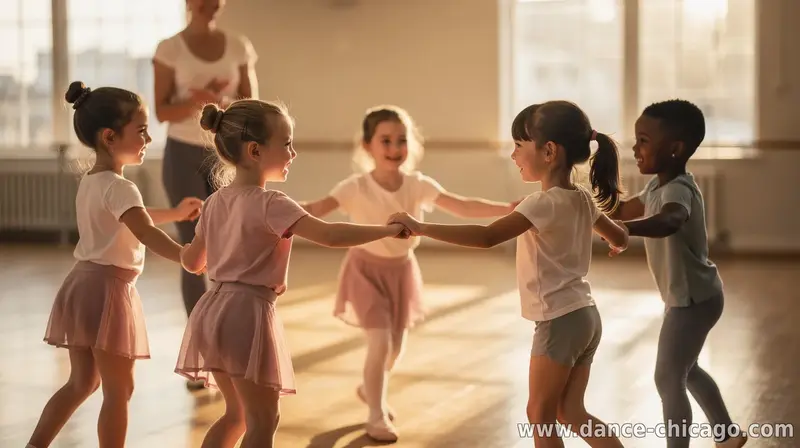
Group dance can be especially helpful because it creates belonging. Partnering and circle formations allow children to synchronize with others, which can reduce the feeling that they are being watched. Instead of competing for attention, children learn to coordinate—following shared timing and responding to group cues.
In this setting, social confidence can develop through repeated, low-stakes interaction: smiling, matching a move, taking turns, or helping with simple roles like “line leader” for a moment. Over time, these experiences can strengthen the skills that shy children often find challenging, such as initiating contact and staying engaged in group settings.
What parents can look for in a program
Not all dance classes will feel safe or supportive for children who are shy. Parents and caregivers can look for teaching practices that emphasize encouragement, clear structure, and respectful boundaries. A good fit often includes age-appropriate pacing and a teacher who monitors comfort—not just performance.
It can also help to ask how instructors handle participation levels (for example, whether children can observe first, opt into gradual involvement, or be given alternative roles). Programs that communicate these options tend to reduce anxiety and encourage consistent attendance.
Confidence-building through dance is not about turning every child into a spotlight performer. For many shy children, the real win is learning they can take up space safely—one step, one rhythm, and one successful try at a time.
Related materials
Be the first to share your opinion with others.