
- 09/20/2026
- 178 Views
- Comment
Ballroom dance classes are all about movement, posture, and comfort—so the best outfit is one that lets you practice confidently without restricting your range of motion. Whether you’re learning standard (like waltz and foxtrot) or Latin-style basics, your goal is to look polished while staying comfortable enough to focus on technique.
Start with the right fit and fabric
Pick clothing that follows your body’s lines without being tight enough to limit movement. Breathable, stretchy fabrics (like cotton blends, jersey, or performance knits) work well for staying comfortable through practice. Avoid overly bulky layers that bunch up when you turn or hold frame.
For tops, aim for a secure neckline so you don’t adjust constantly during turns. For bottoms, choose styles that allow easy bending at the hips and knees—especially when practicing steps, rises, or footwork.
Choose footwear that supports clean footwork
Footwear is the biggest difference-maker in how well you can learn. For most beginners, ballroom classes recommend shoes designed for dance so your foot can slide and pivot correctly while providing grip and support.
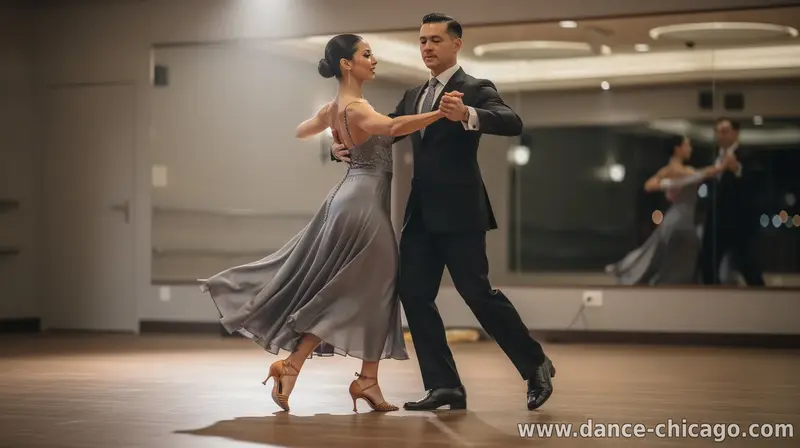
Women: Low- to mid-heeled ballroom shoes are common for standard and Latin practice (with the exact height depending on your level and comfort). Choose smooth soles suited for studio floors and make sure the fit is snug at the heel.
Men: Clean dance shoes (often with a leather or suede sole, depending on class norms) help you maintain control during steps. Ensure the shoes fit securely so your foot doesn’t slide inside during turns.
In general, skip sneakers unless your studio specifically allows them for beginners. Also avoid street shoes with worn-out soles, since inconsistent traction can make footwork harder to learn safely.
Standard vs. Latin: dress with the dance style in mind
Ballroom outfits don’t need to be overly formal for class, but aligning your look with the style can help you practice the right way.
Standard (waltz/foxtrot): Smooth lines are key. Dresses with flowing skirts or tops that stay in place are often ideal. If you’re wearing separates, consider a fitted top and a skirt or tailored trousers that drape neatly as you rotate.
Latin (cha-cha/rumba/samba): Movement and flexibility matter. Many dancers choose stretchy, fitted tops and skirts or dance shorts designed for motion. A slightly higher rise skirt or split detail can make it easier to move, but avoid anything that becomes distracting or needs constant adjusting.
Keep it practical: comfort, coverage, and safety
Even if you want to look your best, prioritize what helps you learn: stable clothing, secure shoes, and enough freedom to move. Choose underwear and bras that won’t shift or show through under studio lighting and movement. If you wear a dress or skirt, make sure it allows comfortable stepping and doesn’t ride up when you raise your arms or extend your frame.
Bring a small backup layer if your studio runs cool—like a light wrap or cardigan that won’t interfere once you’re dancing.
Grooming and accessories: less is more for class
Keep accessories minimal. Long dangling earrings, loose bracelets, or anything that can catch on clothing can be distracting or unsafe during close-contact holds and turns. If you wear hair accessories, use secure pins or bands so your hair stays put through spins and dips.
Quick checklist before you leave
- Fit: Secure at the shoulders/waist; comfortable during bends and turns.
- Fabric: Breathable and stretchy, not stiff or bulky.
- Shoes: Dance-appropriate, clean, and properly fitted (heel height chosen for comfort).
- Coverage: Movement-friendly with no constant adjusting.
- Accessories: Minimal to avoid distractions or snags.
With the right outfit, you’ll spend less energy adjusting clothing and more time building footwork, posture, and partner-ready technique. When in doubt, check with your studio’s dress code—many have specific shoe guidelines or recommendations for beginners.
Related materials
Be the first to share your opinion with others.