
- 09/20/2026
- 70 Views
- Comment
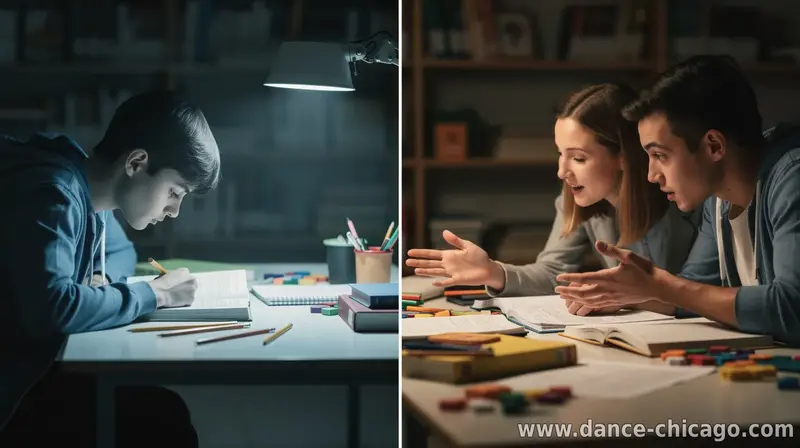
Choosing between solo lessons and partner lessons can feel like a trade-off: solo sessions often offer focused, personalized coaching, while partner sessions add real-world interaction from day one. The “right” start isn’t universal—your best option depends on what you’re learning and what kind of progress you want first.
In this guide, we break down the key differences and provide a practical decision framework you can use immediately.
Start with solo lessons if you need foundations fast
If your goal is to build core skills—technique, fundamentals, posture, timing basics, or correct habits—solo lessons are usually the cleanest starting point. Without the complexity of coordinating with another person, you can concentrate on form and repeatable skills. Coaches can also correct specific movements more precisely and track your progress session by session.
Solo lessons are also a strong fit if you’re new, returning after a break, or feel self-conscious. Many learners improve more quickly when they can practice at their own pace and ask questions without the pressure of keeping pace with someone else.
Choose partner lessons when interaction is the point
Partner lessons shine when the skill you’re building is inherently social or relational—think coordination, response, communication, or adapting to another person’s style. You’ll learn how to adjust in real time, develop timing with a counterpart, and build confidence in practical scenarios earlier.
Partner lessons can also accelerate motivation: progress feels more “real” because you’re practicing the thing you actually want to do, not only its individual components. For many people, this early interaction makes lessons feel more engaging and purposeful.
How to decide: a quick checklist
Use these questions to select the best starting format:
- What’s your goal? Foundations first → solo. Real interaction → partner.
- How comfortable do you feel? New or nervous → solo to build confidence.
- What kind of feedback do you need? Technique corrections → solo. Timing and coordination → partner.
- How soon do you want to perform with others? If “soon,” partner lessons help.
- Are you practicing consistently between sessions? Solo often benefits from structured self-practice.
A smart hybrid approach: start solo, then move to partner
For many learners, the most reliable path is a staged plan. Beginning with solo lessons for a few weeks (or until your basics are steady) helps you avoid practicing incorrect fundamentals. Once your technique feels consistent, switching to or adding partner lessons lets you transfer those skills into interactive scenarios.
This hybrid approach reduces frustration: you’re not trying to solve multiple challenges at once, and your coach can focus on coordination rather than correcting foundational mechanics.
What to ask your instructor before committing
Whether you choose solo or partner lessons, it helps to clarify expectations up front. Consider asking:
- What milestones should I reach before switching formats?
- Will I get personalized goals and measurable progress targets?
- How do you pair partners (skill level, matching, progression)?
- How should I practice between sessions?
- Do you recommend solo-to-partner or partner-to-solo for beginners?
If you’re unsure, these questions usually reveal whether the program is set up for your learning stage—and whether solo or partner sessions are likely to produce the fastest, most confident progress.
Bottom line: Choose solo lessons to build strong foundations and confidence, and choose partner lessons when interaction, coordination, and real scenarios matter most. If you want the fastest overall improvement, start solo for fundamentals, then transition to partner work once the basics are reliable.
Related materials
Be the first to share your opinion with others.