
- 09/20/2026
- 267 Views
- Comment
For beginners, the ballroom question is often simple: Which style should I learn first—Latin or Standard? The answer depends on the kind of music you enjoy, the body skills you want to build, and how you like to move on the floor.
Both are popular, both are taught worldwide, and both can be a fast track to confidence. But they train different fundamentals: Standard emphasizes frame, glide, and control; Latin emphasizes grounded action, sharp shapes, and hip-driven rhythm.
What “Latin” means in ballroom
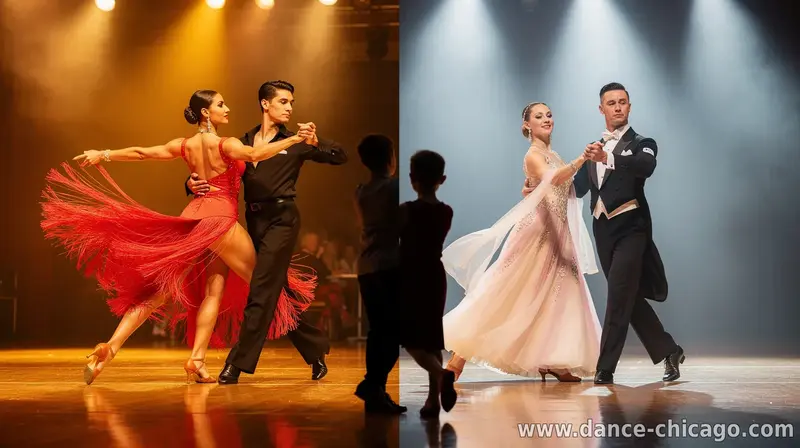
Latin ballroom typically includes dances such as Samba, Cha-Cha, Rumba, Paso Doble, and Jive (often taught under a common “Latin” umbrella). Expect quicker musical textures, more expressive upper-body styling, and movement that looks lively even at lower speeds. In most beginner lessons, students learn how to coordinate footwork with hip action and torso shapes.
Latin is often described as more “percussion-forward”—you’ll feel the rhythm through the feet and hips. The posture is more relaxed than in Standard, which can make it feel more approachable for dancers who don’t want to focus immediately on a strict formal frame.
What “Standard” means in ballroom
Standard ballroom commonly includes Waltz, Tango, Viennese Waltz, Foxtrot, and Quickstep. Standard is built around traveling patterns, smooth rise-and-fall, and a consistent couple frame. Compared with Latin, Standard usually asks more for controlled posture, connection, and long lines—especially as you improve.
If Latin feels like “bounce and expression,” Standard often feels like “flow and precision.” Beginners typically start with maintaining a stable frame, learning basic timing, and practicing smooth weight changes to keep the couple moving together.
Key differences beginners can feel quickly
Even after one or two lessons, most people notice these contrasts:
- Rhythm: Latin tends to be hip-and-foot rhythmic; Standard tends to be glide-and-timing rhythmic.
- Posture: Standard uses a more formal, structured frame; Latin is generally more relaxed and expressive.
- Movement style: Latin favors grounded action and visible shapes; Standard favors travel, rise-and-fall, and smooth lines.
- Musical feel: Latin often feels bold and percussive; Standard often feels flowing and dramatic.
None of this means one is “easier” in every respect—just that the skills you’ll practice are different.
Where should beginners start?
A good rule of thumb: start with the style that matches what you’ll practice willingly. If you’re choosing between Latin and Standard without a clear preference, consider these quick decision guides:
- Choose Latin first if you love upbeat music, enjoy strong body styling, or want a less rigid-looking posture right away.
- Choose Standard first if you prefer smooth, elegant movement, want to learn frame and partner connection fundamentals early, or like long lines and traveling patterns.
- Choose whichever your teacher teaches best for beginners: the quality of instruction matters more than the style label.
- If you’re unsure, take a “try-it” week—most studios can schedule intro classes so you can compare how each feels on your body.
Many dancers eventually learn both. Starting with one style gives you time to build core partner skills (timing, connection, awareness) before adding the contrasting movement style.
Whichever you pick, keep expectations realistic: progress comes from consistent practice, not perfection. Your first goal should be to stay on beat, communicate comfortably with your partner, and enjoy the learning process—then your technique will follow.
Related materials
Be the first to share your opinion with others.