
- 09/21/2026
- 341 View
- Comment
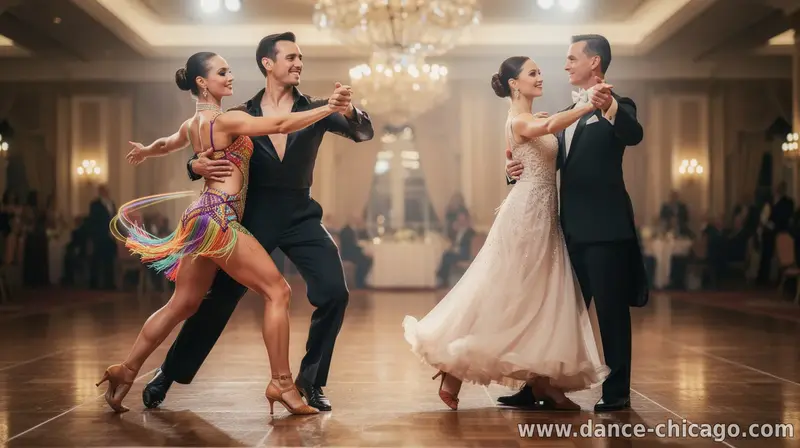
In competitive ballroom, you’ll typically hear two umbrella styles: Standard and Latin. Both are ballroom disciplines, yet they ask dancers for different body actions, partner frames, and performance energy—so the look on the floor can feel like two different sports.
1) Music and overall mood
Standard is performed to smooth, flowing rhythms designed for long lines and sustained movement. Styles like the waltz and foxtrot emphasize glide and poise.
Latin uses more percussive, accent-driven music that supports sharper movements and more visible character. The mood is typically more intense, rhythmic, and expressive.
2) Dance technique and movement style
In Standard, dancers prioritize rise and fall, controlled sway, and a consistent, elegant look throughout movement. Footwork tends to travel in a smooth, continuous way that supports the frame.
In Latin, dancers focus on grounded weight changes, hip action, and clear timing to musical accents. Movements are often more “set” and stylized, with emphasis on stops, body isolations, and pronounced direction changes.
3) Partner frame and hold
Standard is danced with a traditional ballroom hold that creates a connected, sustained partner shape. The contact and shape are central to the style’s signature lines.
Latin is also partnered, but the frame is generally more open and varied. The connection may be lighter or more stylized, allowing room for stronger individual body actions while still coordinating with the partner.
Standard ballroom dances typically include: waltz, tango, Viennese waltz, foxtrot, and quickstep (depending on the competition rules).
Latin ballroom dances typically include: cha-cha-cha, samba, rumba, paso doble, and jive (with variations by level and organizer).
Because the choreography and technique are so different, switching between the categories usually means retraining fundamentals—especially how you use the upper body, how you place weight through the feet, and how you interpret musical accents.
If you’re choosing what to try first, consider what you enjoy watching: Standard for extended lines and elegant traveling motion, or Latin for rhythm, expression, and bold body styling. Many dancers eventually train in both, but they usually start by building a strong base in one category.
Related materials
Be the first to share your opinion with others.