
- 10/12/2026
- 169 Views
- Comment
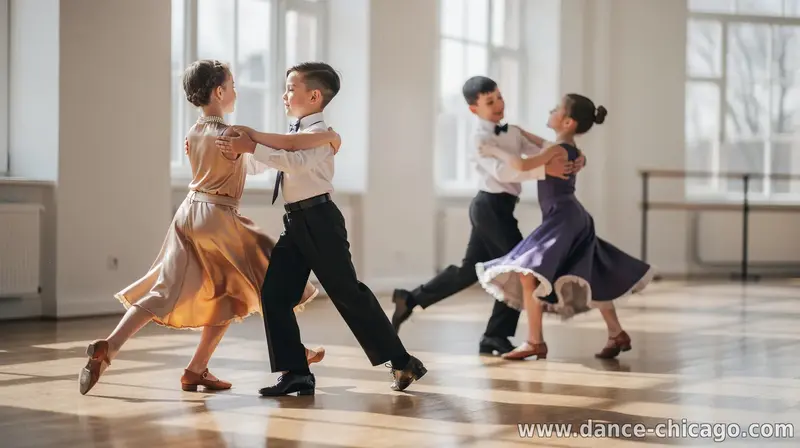
Ballroom dance is often associated with elegance and social connection, but for many families it’s also becoming a practical activity for physical development. In particular, ballroom dancing can support better posture and coordination in kids by combining steady movement patterns with repeated, guided practice.
Unlike unstructured play, ballroom classes typically emphasize technique: how to stand, how to hold the frame, how to shift weight, and how to move smoothly through space. That structure encourages children to notice their bodies and correct alignment over time.
Posture: training alignment through “frame” and balance
Most ballroom styles teach a “frame”—a set of positioning cues for the torso, shoulders, and arms that helps dancers stay tall and stable. For kids, practicing these cues can translate into stronger postural habits during everyday activities, from walking to sitting at a desk.
As children learn to keep their weight centered and avoid slumping, they also build endurance in the muscles that support upright posture. Over weeks and months, instructors often reinforce small adjustments, helping kids internalize what good alignment feels like.
Coordination: timing, footwork, and controlled movement
Ballroom dance routines require synchronized body parts—feet, hips, torso, and arms all working together. The need to step on time with the music can improve timing and motor coordination, especially when kids practice the same pattern repeatedly.
Footwork drills are a key component. Whether it’s a step sequence or a turn entry and exit, kids learn to coordinate direction changes while maintaining upper-body control. This combination can be especially helpful for children who are still developing fine-motor skills and spatial awareness.
Spatial skills and partner awareness
Coordination in ballroom isn’t only about moving well; it’s also about moving safely around others. Partner dancing teaches children to gauge distance, follow lead and follow signals, and adjust their motion to their partner’s pace.
That partner awareness can sharpen reaction skills and help kids learn to manage their movement in real time—an advantage that carries over to sports and playground games where timing and positioning matter.
What parents may notice over time
While results vary by child, many families report gradual improvements such as more confident movement, smoother transitions between steps, and a greater sense of control when transitioning from standing to motion. In class, kids may also become better at maintaining balance during turns and recovering quickly when they make a mistake.
Because ballroom dance is often taught in age-appropriate progressions, children can start with simpler steps and build toward longer sequences. That “learn, repeat, refine” approach can make physical improvements feel achievable rather than overwhelming.
For parents considering enrollment, it’s worth looking for instructors who emphasize technique and safety over competition for younger learners. A supportive class environment—where kids are encouraged to practice posture cues and focus on musical timing—can make it more likely that the benefits show up in both the dance floor and everyday life.
Related materials
Be the first to share your opinion with others.