
- 09/20/2026
- 165 Views
- Comment
Ballroom dance is increasingly viewed by parents and youth instructors as more than a social activity. For many kids, it becomes a practical training ground for healthier movement—particularly posture, balance, and coordination—thanks to the sport’s emphasis on frame, rhythm, and spatial awareness.
Unlike unstructured play, ballroom routines guide children into repeatable body mechanics: standing tall, aligning the torso, and controlling arm and shoulder positions while moving in time with music.
Posture: a “frame” kids learn through repetition
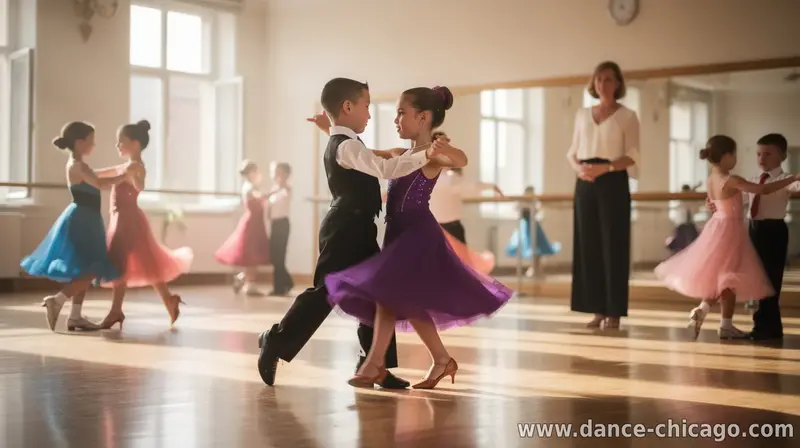
Most ballroom styles rely on maintaining a consistent “frame,” which typically means an upright spine, relaxed but engaged shoulders, and clear alignment of the head and chest. Over repeated practice, children often become more aware of how their bodies sit and move—helping posture improve from both the inside (core engagement) and the outside (consistent upper-body positioning).
Instructors commonly reinforce posture with hands-on cues—such as where to place the shoulders or how to keep balance during turns—so kids build the habit rather than simply understanding it conceptually.
Coordination: feet, arms, partners, and timing
Ballroom movement requires children to coordinate multiple elements at once: footwork patterns, directional changes, upper-body control, and timing to musical beats. When kids practice step sequences and turns, their nervous systems strengthen the connections needed to plan and execute movement smoothly.
Partner work adds another layer of coordination. Children must respond to their partner’s motion while staying aligned with the music and the room—an experience that can sharpen reaction skills and body control without needing special equipment.
Balance and spatial awareness
Whether it’s gliding steps or rotating turns, ballroom dance trains balance under changing conditions. Kids learn to shift weight carefully, maintain control through pivots, and recover alignment after movement accelerates or direction changes.
Because ballroom is typically danced in a shared space with other couples, children also develop spatial awareness—judging distance, navigating around others, and understanding how their position affects movement safety.
Confidence and movement literacy
Beyond physical mechanics, ballroom can build confidence by giving children a structured way to improve. As kids master posture cues and timing, they often become more comfortable moving in public settings—an effect many parents describe as “better body awareness” and less self-consciousness.
That movement literacy can be valuable in other areas, from team sports to everyday activities at school, where coordination, balance, and controlled body positioning matter.
For families considering ballroom dance, the biggest differentiator is instruction quality. Programs that focus on age-appropriate progressions, supportive feedback, and safe technique tend to maximize benefits—turning rhythm and partnered movement into a fun, measurable way for kids to strengthen posture and coordination.
Related materials
Be the first to share your opinion with others.