
- 10/12/2026
- 156 Views
- Comment
Walking into your first ballroom lesson can feel intimidating, but most studios are prepared for absolute beginners. Knowing what to wear and what to expect can help you relax, move comfortably, and get the most out of your first session.
What to wear for your first lesson
The goal is simple: wear clothes that let you move freely and shoes that give you safe traction and balance. For many students, “comfortable” beats “stylish,” especially during the first meeting while you’re learning basic steps, frame, and timing.
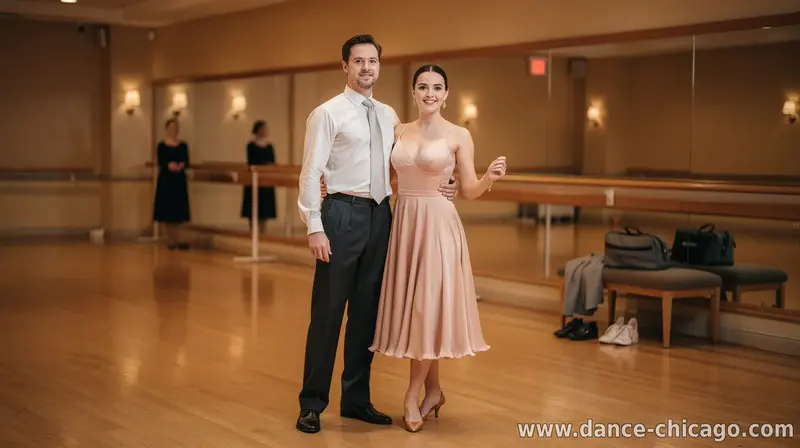
For women: choose a skirt or dress with comfortable movement, or fitted trousers/leggings that won’t bunch. A blouse, fitted top, or dress shirt works well. Avoid anything overly slippery that makes partner work difficult.
For men: wear breathable shirts and trousers or slacks that allow leg extension and smooth movement. A belt is optional, but choose clothing that won’t restrict your stride or cause twisting during turns.
Shoes: if you’re dancing on a studio floor with standard ballroom practice flooring, wear dance shoes if you have them. If not, start with clean, smooth-soled shoes that won’t damage floors and provide some glide. Skip outdoor sneakers with deep tread. If you’re taking lessons in heels, bring the specific heel type recommended by your studio, or ask when booking.
What to bring (and what you can skip)
Most studios keep things straightforward for first-timers. Bring water, and consider a small towel. Keep accessories minimal—no long dangly earrings or anything that might catch during turns. If you wear makeup or have long hair, secure it so it won’t fall in your face while you’re practicing holds and spins.
Don’t worry about bringing a partner if your class is beginner-friendly. Many lesson formats rotate partners, pair learners with partners provided by the studio, or use structured partner changes to build comfort and technique.
What to expect during the first class
A typical first ballroom lesson starts with introductions and basic studio guidance—often including how to find your spot, follow the instructor’s cues, and practice safely in a group setting. You’ll likely review posture and the idea of a shared “frame,” which is how dancers connect through hands and body positioning.
Next, expect short teaching blocks. In many beginner classes, instructors break down the lesson into manageable parts: weight changes, basic walking rhythm, then a simple set of steps. Partnering is introduced gradually, so you’re not expected to master turns or complicated patterns immediately.
You may also hear timing cues (like counting or musical beats) and practice in small sequences before combining everything into a short routine. The pace is usually designed for comfort and learning, not performance.
Common beginner questions
“Will I look awkward?” Yes—at first, that’s normal. Beginner classes are built for learning, and instructors expect that students will need repetition. Focus on doing the steps correctly, not on looking perfect.
“Do I need to know ballroom dance styles already?” No. Many studios offer multi-style beginner tracks (like adding steps from waltz, tango, or cha-cha across lessons) or teach one style at a time.
“What if I don’t have the right shoes?” Bring what you have and ask. Studios often guide new dancers toward the safest option for the floor and the style of lesson you’re taking.
Your first ballroom lesson is less about having perfect technique and more about building confidence: getting comfortable with posture, learning the rhythm, and understanding partner basics in a supportive environment. Wear something you can move in, bring water, and show up with a beginner mindset—then let the instructor guide the rest.
Related materials
Be the first to share your opinion with others.