
- 10/12/2026
- 2201 View
- Comment
Competing for the first time in ballroom can be exciting and nerve-racking at the same time. The good news: once you know the flow of the day and prepare your mind and logistics in advance, you’ll be able to focus on what matters—showing up confident and performing your best.
Mental preparation: calm nerves and sharpen focus
In the weeks leading up to a competition, shift from “Will I do well?” to “What is my plan for each moment?” Practice your routine with a competition mindset: visualize the start, your first couple of beats, and how you’ll recover if something feels off.
On competition day, set a simple focus cue for yourself. For example: think “posture first,” “breathe on the count,” or “smooth through the turn.” This gives your brain something constructive to latch onto when nerves spike. If you feel overwhelmed, use a quick reset: inhale for four counts, exhale for six, and relax your shoulders before your next practice run.
What to pack: a checklist that prevents last-minute stress
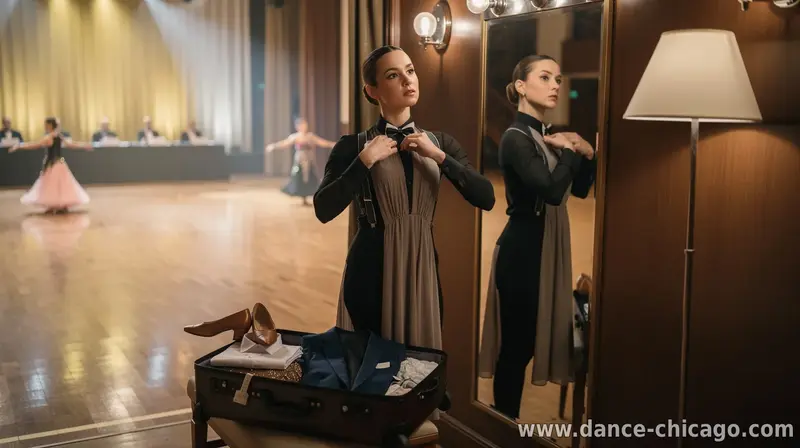
Pack with the assumption that you’ll need to manage comfort, readiness, and quick fixes between rounds. While every event differs, these are common essentials for first-timers:
- Shoes (and any required backup pairs)
- Outfit & undergarments, plus a garment bag for protection
- Accessories (hair items, dance-specific fasteners, tape/elastic as needed)
- Comfort basics (water, snacks, small towel, wipes)
- Quick repair kit (safety pins, needle/thread, mini glue or tape if appropriate)
- Practice items (music cue sheet/plan, rosin or shoe aids if your discipline uses them)
Also consider electronics carefully: bring only what you truly need, keep devices on silent, and use headphones sparingly if allowed. The goal is to stay present—not distracted.
What to expect on the day: the typical competition flow
Most events follow a predictable rhythm. You’ll usually start with registration/check-in, followed by warm-up time and preparation for your designated round(s). Schedules can vary, so arrive with buffer time—especially your first time—so you’re not rushing.
When it’s close to your event, find out where the competitors gather, where you can warm up, and what the “call” process looks like (for example: announcements, posting of brackets, or a staff member checking competitors). If you can, watch how other couples move through the staging area so you’re not guessing.
During warm-up, keep it practical. You’re not trying to perfect everything on the floor; you’re reminding your body of the shape, timing, and connection you’ll use in competition. Focus on the first and last sections of your dance—those are often where nerves show up.
During your dances: confidence strategies that work under pressure
Once you’re on the floor, adopt a “performance checklist” in your head: posture set, frame established, weight under control, and timing aligned with your partner. If you make a mistake, treat it as a moment to reset rather than a sign to panic—keep your next count calm and your movements deliberate.
Remember that ballroom scoring typically reflects overall technique, connection, and presentation—not perfection. Judges are watching the full picture. Your job is to communicate the dance clearly from start to finish.
After your round, take a breath and give yourself credit for showing up and executing your plan. Whether it’s your first event or your tenth, every competition is a learning experience—one that builds confidence through familiarity. With mental prep, a smart packing list, and a clear understanding of the day’s flow, you’ll be ready to step onto the floor with less stress and more control.
Related materials
Be the first to share your opinion with others.