
- 10/12/2026
- 251 View
- Comment
Whether you’re returning to ballroom basics or building confidence on the floor, the best practice spaces in Chicago share one key feature: consistent instruction plus enough social dancing to apply what you learn. From dedicated dance studios to community-run events, you can find settings that support both technique and real-world timing.
1) Ballroom-focused studios for guided practice
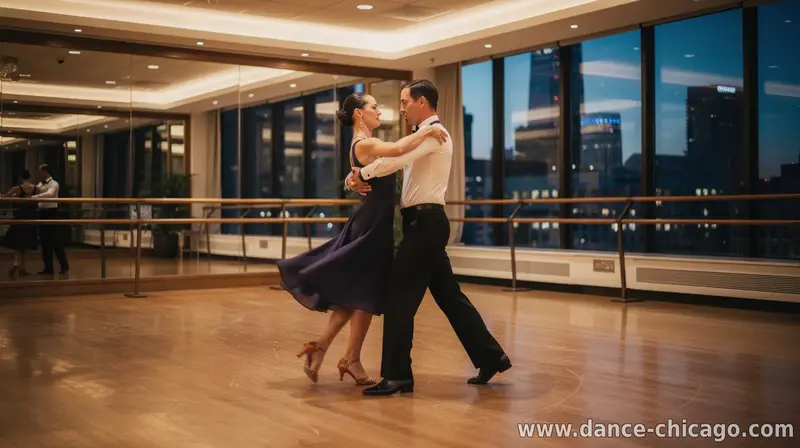
For structured improvement, look for Chicago studios that offer private lessons and small-group practice. Studios typically provide mirrors, trained instructors, and lesson progressions that make it easier to work on posture, frame, footwork, and lead/follow clarity. If you want faster results, book a recurring private session (even once a month) and use group classes for repetition.
2) Social dance nights to apply skills with partners
After you’ve learned the fundamentals, practice becomes more effective when you dance with different partners in a real setting. Social dance nights help you adapt to different styles, walking pace, and floor traffic—critical for ballroom success. Prioritize events that clearly welcome beginners or offer partner-matching/intro portions, so you can get repetitions without pressure.
3) Learn-and-practice workshops and themed events
Workshops can be a great way to target one skill at a time—like turning technique, timing drills, or handling turns on a crowded floor. Many dancers use these events as “practice blocks” between longer lesson series. When choosing workshops, check for clear descriptions of the level (beginner/intermediate) and whether the format includes hands-on practice rather than only demonstrations.
Chicago’s size means there are often multiple neighborhoods with dance opportunities. As a practical strategy, pick one studio-based option for instruction and one social option for frequent floor practice. That pairing usually produces the most noticeable improvements in a short time.
If you’re specifically chasing ballroom etiquette and partner work, consider venues that emphasize guidance for first-timers. A supportive environment reduces the friction of switching from class drills to full dances—especially for tango, waltz, and swing-era rhythm patterns where connection and pacing matter.
To make the most of any practice location, come prepared with a simple goal for each session. Examples include: improving closed-hold alignment, smoothing turning transitions, or practicing a consistent lead on basic figures. Then, after you dance, note what felt stable and what didn’t—so your next class or workshop has a clear focus.
Finally, don’t underestimate rehearsal etiquette: arrive early for warm-up, be respectful with space, and ask instructors or event hosts what the best way is to practice at that specific venue (for example, whether there’s an assigned beginner area or a preferred way to rotate partners).
If you share your experience level (brand-new, intermediate, or advanced) and which dances you want most (for example, waltz/tango/foxtrot, or Latin/competitive ballroom), we can narrow these recommendations into a short list of the best-fit options and an easy practice plan.
Related materials
Be the first to share your opinion with others.