
- 07/27/2026
- 244 Views
- Comment
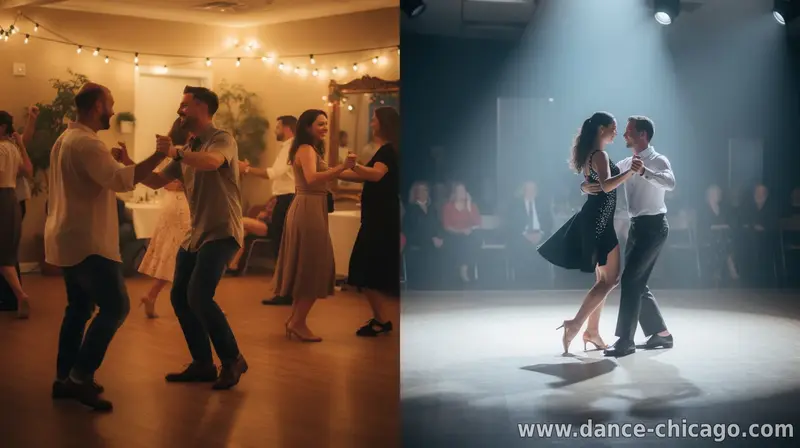
Social dancing and competing may both involve the same genres—swing, salsa, ballroom, dancehall, hip-hop, or country—but they reward different things. The biggest differences come down to goals, format, and what dancers are expected to do on the floor.
In social dancing, the central purpose is to have fun while building rapport with partners and the community. The environment is typically informal: DJs or music playlists set the vibe, dancers rotate partners, and there’s usually a strong emphasis on comfort, respect, and being welcoming.
Competing, by contrast, is designed around performances that are evaluated. Dancers prepare for specific events—often with defined rules, tempos, and scoring criteria—then present routines that are meant to be judged against standards like technique, timing, control, and presentation.
Goals and mindset
Social dancing tends to prioritize personal expression, musicality, and partner connection. A dancer might experiment with styling, try a new step, or simply enjoy the music while maintaining good floor etiquette.
Competing shifts the mindset toward clarity and consistency. Dancers rehearse to hit specific musical counts, execute elements reliably, and show intentional performance choices that translate well to judges and, sometimes, a live audience.
Structure and expectations
Social dancing usually allows flexibility. You may choose moves that fit your partner’s lead/follow, the crowd’s energy, or the song’s rhythm changes. Even when there are “styles” or common patterns, adaptation is often part of the skill.
Competition routines are typically more rigid and standardized. Competitors follow choreography or event-specific requirements and are expected to demonstrate technique under time pressure—while staying within costume, timing, and format guidelines.
Feedback and measurement
Feedback in social settings is often informal: you learn by watching others, getting pointers from instructors, or receiving quick encouragement from partners. Progress is mostly measured by confidence, enjoyment, and how well you can dance with different people.
In competitions, progress is quantified through scoring and rankings. Judges apply consistent criteria, so dancers may focus on repeatable results—like clean footwork, body line, synchronization (where relevant), and controlled dynamics—rather than purely spontaneous creativity.
Ultimately, many dancers do both. Social dancing can build musicality, responsiveness, and community, while competing can sharpen technique and performance under pressure. Choosing between them isn’t an either/or decision—it’s often a balance that helps dancers grow across different dimensions.
Related materials
Be the first to share your opinion with others.