
- 09/21/2026
- 297 Views
- Comment
Supporting a young dancer at home is less about pushing harder and more about building the conditions where skill, confidence, and safety can grow. Whether your child is starting ballet, learning hip-hop, or training across styles, your role is to make practice sustainable and rewarding.
Set a realistic practice routine
Young dancers do best with short, predictable sessions. Instead of one long practice, aim for frequent, age-appropriate blocks—then finish before frustration sets in. A simple approach is to begin with a quick warm-up, move into skill work, and end with a brief cool-down or stretch.
Focus on form, not perfection
Progress comes from repetition with attention to technique. Encourage “try again” thinking: if something looks off, stop, reset, and work slowly. Celebrate small improvements—cleaner posture, steadier balance, or better timing—rather than only final performance results.
If you’re watching from the sidelines, use specific praise: “That turn looked controlled,” or “Your landing was quieter.” Avoid comparisons to other dancers; they rarely help motivation and can create unnecessary pressure.
Support strength and flexibility safely
To help prevent injuries, prioritize safe conditioning that complements their training. Encourage basic mobility and core stability, and remind them that pain is a signal to stop and talk to a coach. Avoid forcing extreme stretches or pushing through sharp discomfort.
Ask the studio what warm-ups or strength routines they recommend, and align home practice with that guidance. If your child has recurring discomfort (knees, ankles, shins, or lower back), consider checking in with a qualified clinician.
Hydration and recovery matter too. Make sure they have water, enough sleep, and time to rest—especially after intensive rehearsals or performances.
Make home practice feel encouraging
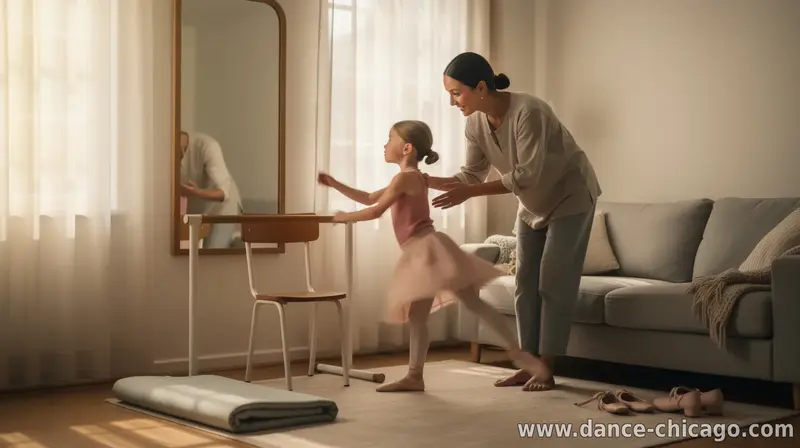
Emotional support can be just as important as physical training. Keep expectations proportional to age and experience. Create a positive environment: a clear practice space, music ready, and fewer distractions. If they feel stuck, switch tasks—focus on one small element, then return to the broader combination.
When nerves show up, normalize them. A helpful message is: “You’re allowed to be nervous—your job is to try your best, and you’ll improve with reps.” Consider doing a low-pressure “dress rehearsal” at home so they can practice confidence without stakes.
Communication with their coach is key. Ask what your child should prioritize this week and how parents can best support between lessons. This keeps home practice aligned with training goals and reduces mixed messages.
Finally, remember that the healthiest motivation is enjoyment plus progress. By keeping routines manageable, reinforcing good technique, and protecting physical well-being, you give your young dancer the foundation to keep growing—on and off the floor.
Related materials
Be the first to share your opinion with others.