
- 10/16/2026
- 147 Views
- Comment
Dancing has long been associated with fun and self-expression, but it’s increasingly being discussed as a practical stress-relief tool after work. For many, it offers a quick break from screens, deadlines, and constant mental load—replacing them with rhythm, movement, and immediate sensory feedback.
While no single activity is a cure-all, physical activity combined with music and structured attention can help the body and mind transition out of “work mode.” That shift—often within minutes—may make dancing a more accessible option than longer workouts, especially on busy weekdays.
Why dancing can lower stress
Stress is not just mental; it’s also physical. Dance requires repeated movement patterns and controlled breathing, which can reduce tension and promote a more regulated physiological state. The engagement of multiple senses—hearing music, feeling tempo, and coordinating steps—also helps pull attention away from rumination.
Music may play a special role. Familiar or upbeat tracks can change mood quickly, and the predictability of rhythm can create a sense of momentum. Over time, returning to the same “decompression” activity can train your brain to associate the routine with relief, making it easier to switch gears after work.
What a post-work dance routine can look like
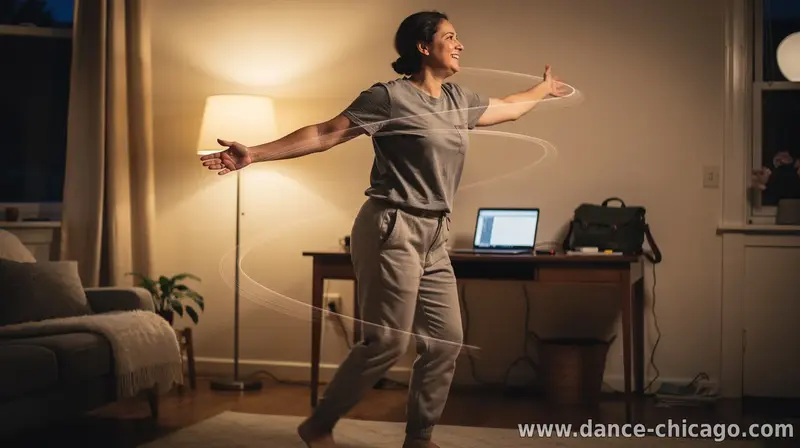
For most people, the goal isn’t to perform flawlessly—it’s to consistently reset. A practical starting point is a 10–20 minute session that fits between getting home and winding down for the night. Options include putting on a playlist and moving freely, following short beginner tutorials, or practicing a few remembered moves until they feel natural.
To make it sustainable, consider keeping your routine low-friction: keep comfortable shoes nearby, choose a go-to playlist, and set a simple timer. If you’re starting from scratch, you might rotate styles (such as hip-hop grooves, salsa basics, or casual freestyle) to find what feels easiest and most enjoyable.
- Warm up for 2–3 minutes to protect joints and reduce stiffness.
- Move consistently rather than going all-out—aim for steady effort you can repeat.
- Cool down with light stretching or slow walking for 2 minutes.
- Hydrate, especially if you’re dancing in a warm room.
- Track mood: note how you feel before and after to identify what works best.
Where to dance: home, classes, or community
Dancing doesn’t have to mean joining a full program immediately. At-home dancing is convenient and private, which can be helpful if you’re self-conscious or starting with limited time. Short online lessons can provide structure, while friends or coworker groups can add motivation and accountability.
For those who want deeper social connection, beginner classes or community events can add an extra layer of stress relief. Many people find that belonging—learning together, sharing progress, and laughing at mistakes—reduces the sense of isolation that often grows during busy weeks.
Safety and realistic expectations
As with any physical activity, start gently. If you have pain in the knees, hips, back, or ankles, choose lower-impact styles, reduce jumping, and prioritize proper footwear. Consider speaking with a healthcare professional if pain persists or if you have a condition that affects safe movement.
It’s also worth setting expectations: dancing may not eliminate every stressor from work, but it can improve how you recover. Think of it as a daily “reset switch” that supports better mood, clearer thinking, and a smoother transition into evening life.
For many, the most compelling advantage is that dancing is both movement and emotion at the same time. Put on music, clear a small space, and give yourself permission to be imperfect—then see how quickly your body learns the difference between tension and release.
Related materials
Be the first to share your opinion with others.