
- 09/22/2026
- 151 View
- Comment
Choosing a dance class for your child isn’t just about finding the right studio—it’s about matching the class to their developmental stage. While both age groups build foundational movement skills, the approach changes as children grow from early learners into more focused, technique-ready dancers.
Below are the key differences between dance classes for ages 4–6 and 7–10, with what that usually means for curriculum, teaching style, and expectations.
1) Focus: play-based movement vs. skill-building technique
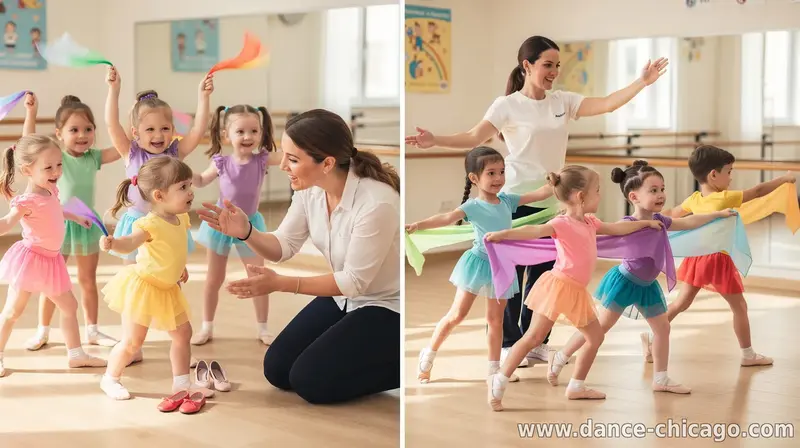
In many programs, children ages 4–6 learn through play. Teachers often prioritize gross motor skills like hopping, balance, and coordination, along with basic rhythm awareness. Choreography may be short, simple, and frequently repeated to help kids feel successful and engaged.
For ages 7–10, classes typically shift toward technique and structure. Kids usually spend more time on posture, alignment, arm positions, and cleaner movement quality. Choreography can be longer and more layered, with clearer counts and transitions.
2) Attention span and class structure
Young dancers (4–6) generally benefit from shorter segments and variety throughout the class. A typical session may include multiple mini-activities—warm-up games, movement exploration, then a brief choreography segment—before ending with a cooldown.
Older children (7–10) can usually handle longer practice blocks. Classes may include a more consistent routine such as warm-up → technique focus → group choreography → optional drills or partner work, depending on the studio and discipline.
3) Rhythm and musicality: basics first, then more precision
At 4–6, rhythm training often stays intuitive—clapping patterns, moving to tempo changes, and learning to start/stop on cues. The goal is to help children “feel” the beat and respond confidently.
At 7–10, rhythm and musicality typically become more specific. Children may work on timing details (hitting counts accurately), dynamics (how movements “feel” in different music sections), and consistent execution across phrases.
4) Choreography expectations and performance goals
For 4–6, choreography is usually designed for confidence and participation. It may be more forgiving, with simplified steps and frequent repetition so kids can learn quickly without frustration.
For 7–10, choreography often becomes a stronger part of the curriculum. Students may be expected to follow more defined patterns, remember longer sequences, and improve movement consistency from class to class. Some programs also introduce performance opportunities—recitals, showcases, or level-based auditions—earlier in the training journey.
Ultimately, the best class is one where your child feels challenged but supported. If you’re comparing studios, ask about class length, what a “typical” lesson looks like, how students are grouped, and whether the program emphasizes play, technique, or both.
For younger kids, look for an environment that prioritizes joy, clear cues, and age-appropriate routines. For older kids, look for structured feedback, technique development, and choreography that matches their growing ability to learn and repeat accurately.
Related materials
Be the first to share your opinion with others.