
- 10/18/2026
- 87 Views
- Comment
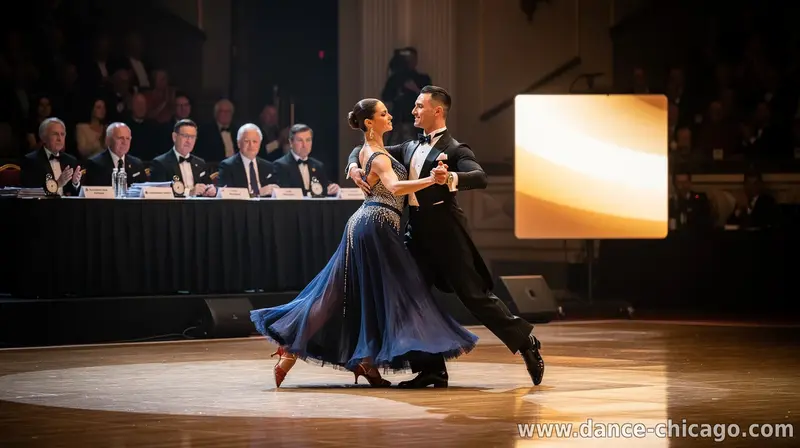
Ballroom competitions may look like pure artistry, but judges are assessing a structured set of elements. While the exact emphasis can vary by federation, level, and dance category, most judging systems reward the same core skills: technique, musicality, presentation, and pair performance.
For dancers, the biggest takeaway is consistency—judges look for repeatable execution from entry to finish, not isolated moments. A strong performance reads clearly to the panel even from across the floor.
1) Technique and shape
Judges commonly start with fundamentals: body alignment, frame stability, and correct movement patterns. In standard and Latin styles, competitors are expected to display the characteristic posture and shape of the dance—without “collapsing” under pressure or letting the frame change unpredictably mid-figure.
Clean footwork and controlled weight changes also matter. Even when the steps are impressive, judges notice inaccuracies such as dragging feet, uneven contact, or timing that drifts away from the music.
2) Timing, rhythm, and musicality
Ballroom is danced to specific rhythms and character. Judges look for whether the couple moves in sync with the beat and the phrasing of the music—especially at transitions, changes of direction, and ends of phrases.
Musicality shows up in details: how motion accents match rhythm, how smoothly speed is managed, and whether the dancers “breathe” with the phrasing instead of moving mechanically.
3) Style, expression, and floorcraft
Judges evaluate whether the performance communicates the correct style for the dance. That includes expression, confidence in the movement, and appropriate intensity—without turning the performance into a series of disconnected poses.
Floorcraft and spatial control are also important. Competitors should maintain proper spacing, travel with intention, and execute figures so they look planned and balanced rather than cramped or rushed.
4) Partnership quality and synchronization
Ballroom is a conversation between partners. Judges look for unison: matching lines, synchronized timing, and coordinated preparation and completion of figures. Small inconsistencies—such as one dancer arriving early, finishing late, or using a different amount of swing—can reduce marks.
Communication between partners also affects performance quality. Even with strong individual technique, judges may score lower if the couple appears disconnected, unstable, or uncertain during complex sequences.
Ultimately, judges reward couples who blend technical correctness with compelling performance. Competitors who train with clear judging criteria in mind—clean timing, stable shape, recognizable style, and consistent partnership—tend to stand out because the results are visible every time the music plays.
Be the first to share your opinion with others.