
- 09/20/2026
- 255 Views
- Comment
Ballroom dancing in Chicago has never existed in isolation. It has mirrored the city’s waves of immigration, shifts in popular music, and changing ideas about public leisure—while also developing its own local traditions through venues, teachers, and dance communities.
Although the roots of partnered ballroom dance trace back to European courtly styles, Chicago’s ballroom story takes off as the city grows into a major American metropolis in the late 1800s and early 1900s, when imported social fashions meet a booming urban nightlife.
From imported styles to Chicago’s early dance culture
By the late 19th century, “ball” culture was already recognizable in the United States, and Chicago’s social elite sought European-inspired refinement through dances that signaled education, status, and cosmopolitan taste. These events often appeared in theaters, private clubs, and—especially as the city expanded—in prominent hotels that could host large, well-attended gatherings.
At the same time, dance didn’t belong only to the well-to-do. As immigrant communities settled in Chicago’s neighborhoods, partnered social dancing became a way to gather, celebrate, and communicate across cultural boundaries. Over time, the city absorbed and adapted ballroom forms into community-based versions of social dance.
The hotel ballrooms and the rise of modern social dancing
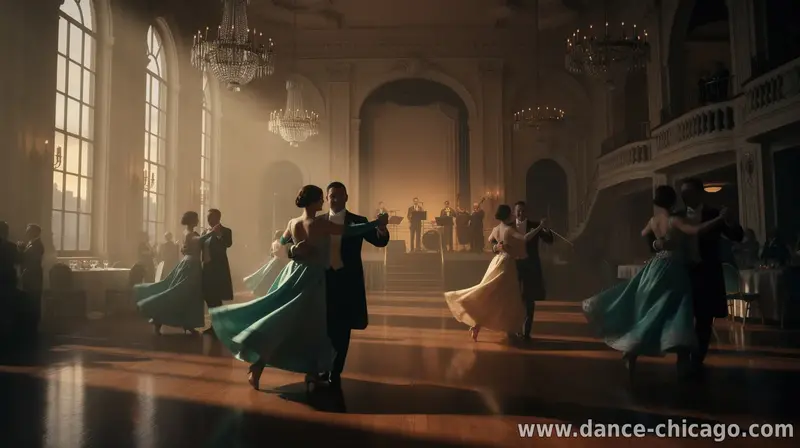
In the early-to-mid 20th century, Chicago’s ballroom scene was buoyed by grand public venues. Large hotel ballrooms and dance halls offered polished settings for two-step, foxtrot, waltz, and other standard styles, with live orchestras setting the tempo for visiting dancers and local regulars.
Chicago’s location and transportation network also helped: the city became a stop for touring performers and instructors, bringing fresh interpretations of popular ballroom trends. Dance in Chicago increasingly became both a leisure activity and a skill-building pursuit, with classes and studios creating pathways from “learning the basics” to mastering technique.
Radio, records, and the changing sound of ballroom
As swing and big-band music gained prominence, the emotional texture of ballroom dancing changed with it. Chicago’s dance floors responded as rhythm and improvisation became part of the social experience, even when the overall “ballroom” label remained tied to formal partner dancing.
Later, recordings and broadcast entertainment broadened access to dance music and choreography, making it easier for Chicagoans to try new steps at home and at local gatherings. This era helped normalize the idea that ballroom dancing could be both traditional and modern—anchored in standards, but responsive to popular culture.
Competitions, instructors, and community institutions
By the latter half of the 20th century, Chicago’s ballroom ecosystem included dedicated instructors, practice events, and competitive circuits. Competitions highlighted technique and presentation, while social nights ensured that ballroom remained accessible for beginners and returning dancers.
Chicago’s dance educators also played a key role in shaping local norms around etiquette, partner etiquette, and learning progression. Many studios emphasized structured practice—closed position work, timing drills, and music interpretation—helping Chicago develop a distinctive reputation among dancers who value both style and fundamentals.
Chicago ballroom today: tradition meets nightlife
Today, Chicago’s ballroom dancing continues in a hybrid form: part formal ballroom culture, part modern social dance scene. Dancers often split time between classic styles and newer partner-dance interpretations, finding spaces that range from studio classes to community-led events.
What endures is the city’s ability to keep ballroom social and vibrant. Whether driven by nostalgia for hotel-era glamour, enthusiasm for competition, or simply the desire for connection on a dance floor, Chicago’s ballroom history remains a story of adaptation—where European roots meet local rhythms and community energy.
Related materials
Be the first to share your opinion with others.