
- 09/20/2026
- 196 Views
- Comment
Helping a 4–6 year old feel rhythm doesn’t require formal lessons or perfect timing. At this age, children learn best through body-based play—listening for a steady beat, moving along with it, and repeating simple patterns often enough to feel familiar.
Start with the goal: rhythm is the ability to notice and match a regular beat. Instead of focusing on “musical correctness,” look for whether your child can keep moving in time, clap together, or predict when something will happen next.
Use steady, child-friendly beat cues
Begin with music that has a clear, consistent pulse. Try songs with obvious drum beats, nursery rhymes with strong meter, or simple percussion sounds. If you have a metronome or a drum app, keep the tempo moderate and repeat the same track for a few days so the beat becomes “expected.”
Pair the beat with a visual or physical cue. For example, you can tap your thigh on each beat, bounce lightly, or use a consistent hand signal. When the child sees and feels the cue at the same time, rhythm becomes easier to recognize.
Make it a movement game, not a test
Once your child can follow the beat for short stretches, add playful movement. Try “freeze and go” (move only when you clap, freeze when you stop), or “march like a robot” to steady music. Keep sessions brief—5 to 10 minutes—so your child stays engaged and success-focused.
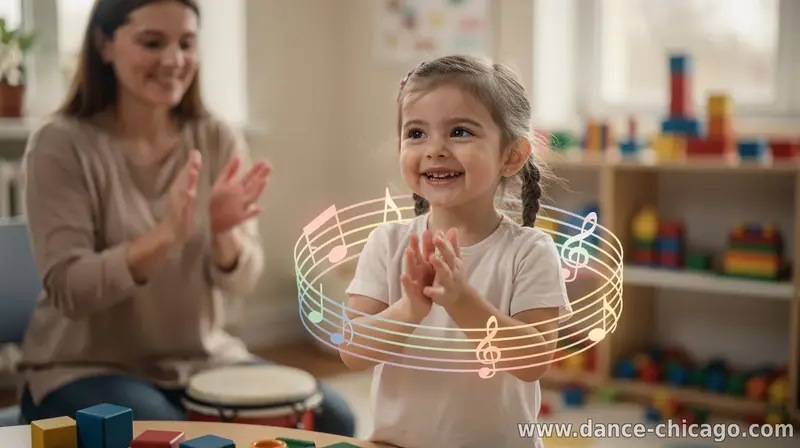
- Clap on the beat: Clap together for 8–16 beats, then pause and let them copy you.
- Step-tap pattern: Step on one beat, tap on the next, staying consistent.
- Make a drum: Use a box or tabletop as a pretend drum and let them “answer” your beat.
Repeat short rhythmic patterns
Rhythm grows through repetition. Use a simple pattern your child can manage—like clap-clap, pause, clap—or one-beat “call and response.” You play a short pattern (two to four beats), and they copy it. Then switch roles so they get to lead.
If your child struggles, reduce the pattern length. Success at smaller units builds confidence and helps them internalize the beat before you add complexity.
Encourage listening to “when things change”
Many children feel rhythm more easily by noticing changes in the music. Play a song and ask a low-pressure question like, “Do we keep moving or do we stop now?” When the beat stays steady but the sound changes, your child practices timing and prediction.
You can also mark the downbeat—the “first” beat in a phrase—using a louder sound (a stronger clap, a stamp, or a drum hit). Children often start to feel rhythm once they can sense where the pattern begins again.
Turn everyday life into rhythmic practice
Rhythm practice doesn’t have to happen only at a music class. Use daily routines as natural tempo tracks: clapping while you wash hands, stepping to the beat while walking into the room, or chanting simple counts while cleaning up. Consistency matters more than duration.
Over time, switch between familiar activities and new songs while keeping the same beat approach. The aim is for your child to transfer “feeling the beat” to different music, not just one favorite track.
Watch for signs of progress
Look for growth in small, observable ways: your child staying with the beat for longer, initiating movement without being prompted, copying claps more accurately, or anticipating the “next” beat. If timing seems off, focus on participation and steadiness rather than perfection.
With calm encouragement and lots of repetition, most children begin to internalize rhythm by feeling it in their bodies first. Keep it playful, keep it short, and celebrate every attempt—rhythm is a skill that improves through joyful practice.
Related materials
Be the first to share your opinion with others.