
- 09/21/2026
- 437 Views
- Comment
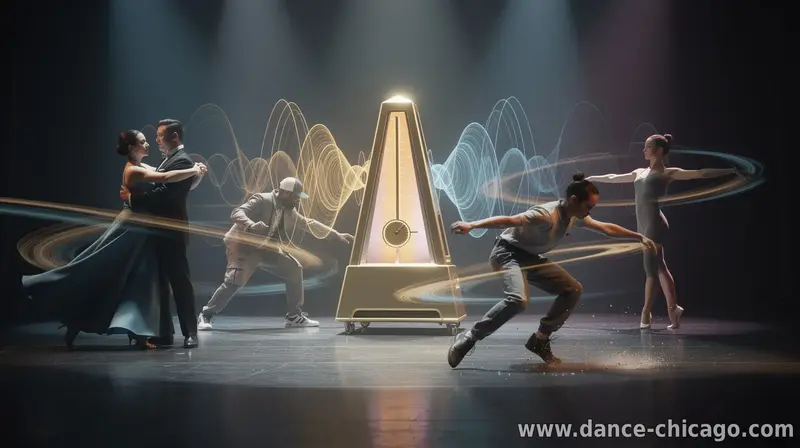
Hearing the beat isn’t just about counting “1-2-3-4.” Different dance styles emphasize different rhythmic layers—kick drums, snare hits, bass patterns, handclaps, or musical accents—so your listening strategy has to change with the style.
Here’s a practical way to train your ear to lock in faster, using the same core method while tailoring what you listen for.
Start with the musical “spine” (tempo and subdivisions)
Before you focus on style, find the song’s tempo (the steady pulse) and then subdivide it. Most popular music fits into subdivisions like 1/2 (every two beats), 1/4 (quarter beats), or 1/8 (eight-count patterns). Try this: tap your foot on the pulse while quietly counting the subdivisions in your head. If your body moves consistently with that internal count, you’re building reliable timing.
Once you can feel the pulse, you’re ready to identify what each dance style “pulls” from that music.
Match what the style emphasizes: percussion, accents, and rhythm grids
Many dances line up with specific instruments or accent moments. Rather than guessing, listen for the rhythmic layer that repeatedly signals the start of movement.
Hip-hop (and many street styles) often track the snare and kick patterns, plus rhythmic vocal or beat stutters. Listen for where the snare lands—those are frequent anchors for hits, body pops, and directional changes. Practice by marking snare hits with a small hand tap while your other movements stay neutral.
Breaking / house commonly use repetitive drum loops and clear 8-count structures. If the beat feels “mechanical” or loop-based, you can usually hear recurring patterns every 4 or 8 counts. Try repeating a short segment of the track and count in 8s until your timing feels automatic.
Salsa and other Afro-Caribbean partner dances tend to emphasize clave-like timing and the relationship between bass and percussion. Salsa dancers often feel the music through the timing of accents (rather than only the downbeat). Listen for the interplay of instruments—when the percussion “answers,” that’s often where weight shifts and steps land.
Waltz and ballroom (3/4) rely on a clear “long-short-short” feel. Listen for the repeating pattern where the first beat is often more prominent, and the next two beats are lighter. Train by tapping the first beat slightly stronger each measure, so your body “hears” the 3-count cycle rather than forcing 4-count habits.
Swing (like swingout or jive) often uses a bouncy feel with a strong beat plus lighter subdivisions. Rather than thinking only in straight eighths, listen for the push-pull energy—where the rhythm “springs” forward. A useful test is to clap along with the swing accents; once your claps land reliably, your footwork will usually follow.
Use a three-step ear drill: isolate → mark → reproduce
If you want results quickly, don’t just “listen”—run short drills. Pick a song you know well and do this in under 5 minutes:
- Isolate: Focus on one element (snare, hi-hat, bass, claps) for 20–30 seconds.
- Mark: Tap that element every time it appears, keeping your taps consistent in time.
- Reproduce: Add a simple movement that matches the marked moments (a step, shoulder hit, or weight shift) before moving to full choreography.
This drill teaches your brain to translate sound into movement cues—exactly what you need to hear the beat across styles.
Practice with “versioning”: same beat, different interpretation
To make your skill portable, practice the same tempo and listen for how each style interprets it. For example, choose one upbeat track and try three approaches: count only the pulse, then mark snare/hi-hat accents, then identify downbeats and how weight shifts land. Even if the choreography differs, your ear becomes stronger because you’re learning the beat layers instead of memorizing steps.
Over time, you’ll stop searching for the “right” count and start detecting the rhythm instantly—whether the music is crisp and percussive, clave-driven, or flowing in 3/4.
Next step: Pick one dance style you’re working on, choose a track that clearly features its main percussion layer, and run the isolate → mark → reproduce drill for 5 minutes daily. Your timing will improve faster than by repeating the full routine without first training the ear.
Related materials
Be the first to share your opinion with others.