
- 10/26/2026
- 425 Views
- Comment
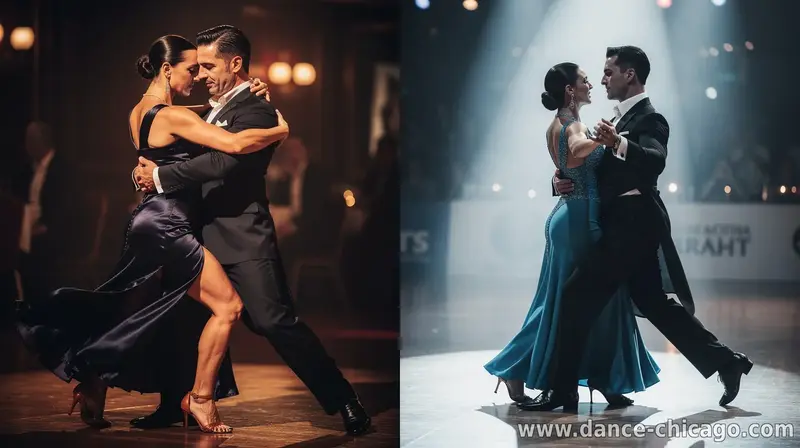
Argentine tango and ballroom tango both trace back to tango’s early social dance culture, yet they evolved in different directions. Today, Argentine tango is known for expressive improvisation, while ballroom tango is standardized for competition.
One of the most visible differences is how each style uses the music. Argentine tango is often danced to a wider range of tango recordings, with dancers responding to subtle shifts in rhythm and phrasing. Ballroom tango is typically danced to a more consistent tempo and arrangement, designed to fit competition expectations and precise timing.
Improvisation vs. prescribed structure lies at the heart of the contrast. In Argentine tango, couples frequently improvise within the moment, building direction changes, pauses, and accents in real time. Ballroom tango, by comparison, follows standardized patterns and sequences, emphasizing repeatable figures and repeatable technique across dancers.
Posture and “embrace” also tend to separate the styles. Argentine tango is commonly danced with a more flexible embrace—often close but able to shift—so partners can negotiate different types of walking and variations. Ballroom tango typically uses a more uniform frame that supports smooth, larger traveling movements and a consistent look from multiple angles in competition settings.
Footwork and movement qualities differ as well. Argentine tango frequently highlights sharp rhythmic steps, body-led weight changes, and moments of “gapping” or suspended balance between movements. Ballroom tango is known for its sweeping rise-and-fall, longer lines, and action that reads clearly from the judging position, with technique focused on clean direction changes and controlled extensions.
Another practical difference is the role of technique emphasis in each community. Argentine tango classes often focus on social navigation—how to manage space, respond to the leader/follower’s cues, and decorate movement according to the orchestra’s feel. Ballroom tango coaching tends to stress technique alignment, standardized timing, and the ability to perform figures consistently under the scrutiny of competition judges.
In terms of atmosphere, Argentine tango is frequently described as conversational and intimate, even when danced on a larger floor. Ballroom tango often feels more theatrical and formal, with an emphasis on geometry, traveling across the floor, and consistent performance standards.
For dancers deciding where to start, the choice often comes down to goals: if you want improvisation, close musical interpretation, and social-dance adaptability, Argentine tango may feel like home. If you’re drawn to structured technique, standardized patterns, and competitive choreography, ballroom tango offers a clear path.
Either way, both styles reward commitment to musicality and partner awareness. The fastest way to find your fit is to try both—take a beginner lesson in each style, then compare how the music “speaks” through your body and how your partnership feels on the floor.
Related materials
Be the first to share your opinion with others.